
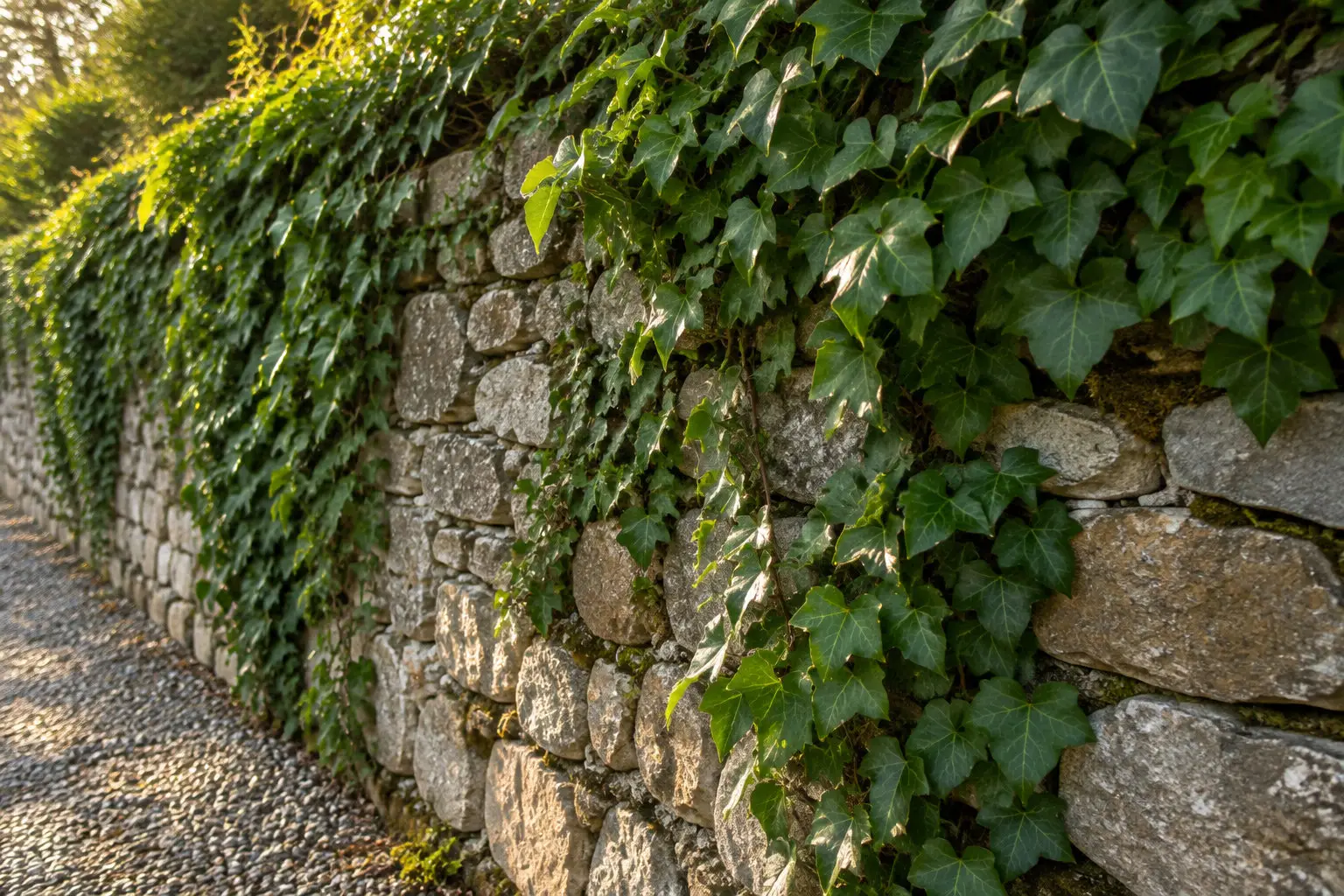
Vegetate a retaining wall with ivy
A retaining wall covered with ivy blends into the garden and gains natural protection from the elements. However, the masonry must be sound: ivy does not deteriorate a solid wall; it takes advantage of every flaw in a decaying wall. The condition of the wall, the choice of species, and an annual trim determine the result.
- Controlling. Stable stones, full joints, no active cracks: the masonry repairs itself before being planted.
- Understand. The crampons are only used for holding onto the ground; the water and food come from the roots of the soil.
- Choosing. Hedera hibernica to quickly cover a large wall, a branched cultivar of Hedera helix for a wall.
- Cutting. Once a year, preferably at the end of winter, when you are removing gutters, tiles and openings.
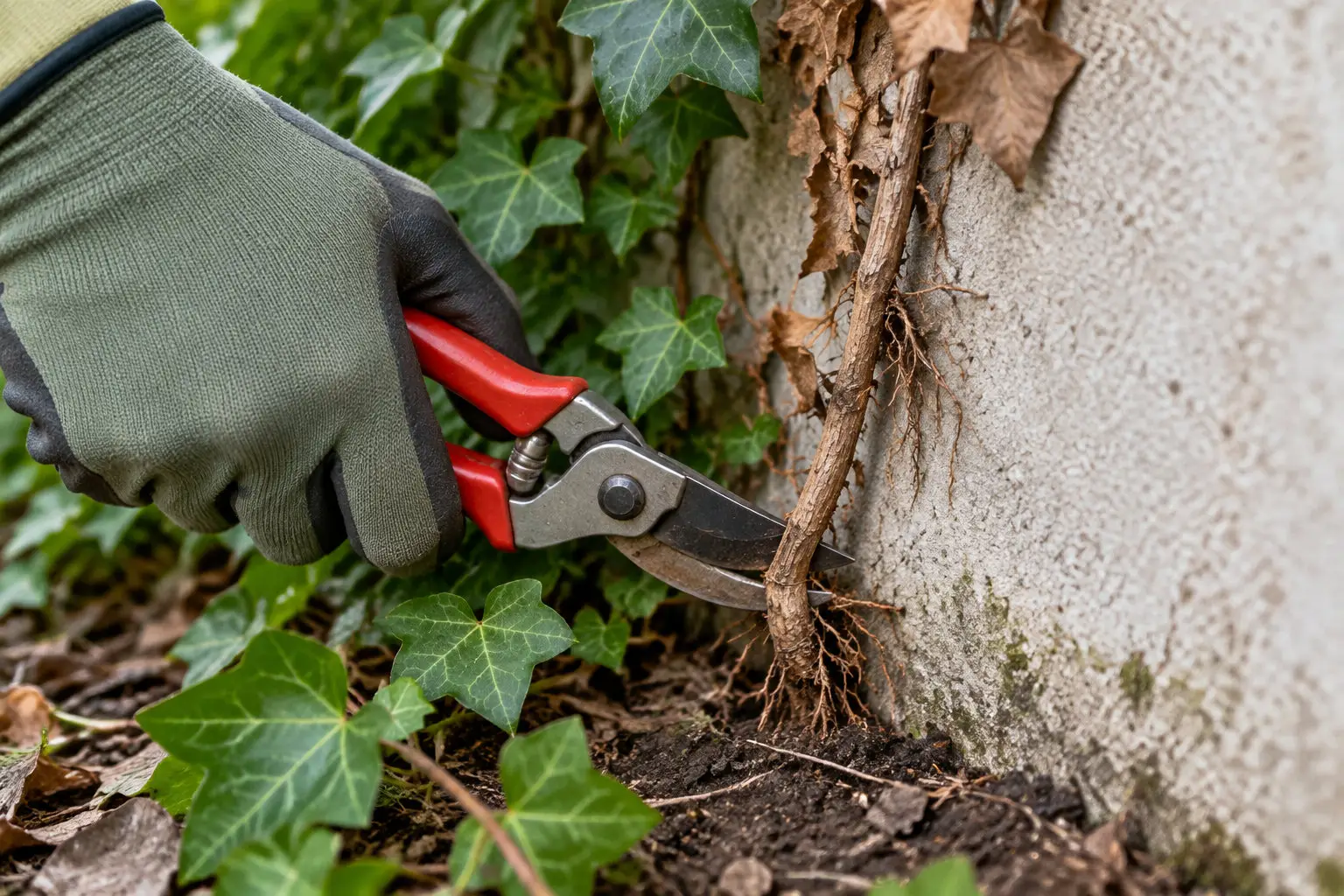
- Remove. Cut at the heel, let it dry, then peel off without pulling it off.
A healthy retaining wall can receive ivy without risk
A healthy and well-maintained wall can be covered with ivy without damage. The idea that the ivy destroys the masonry to find water and food is false: it feeds on the roots planted in the soil at the foot of the wall.
The risk lies elsewhere. On a wall whose plaster is crumbling or whose joints are hollow, the rods penetrate into the smallest cracks. On old walls that have been poorly maintained, the ivy can take root in the weakened masonry and eventually uproot stones. Therefore, the ivy is not a means of hiding a lack of care.
Adapted wall
Sound construction, without cracks or moisture, with well-maintained mortar joints. A masonry of this type is well suited for climbing vines.
Wall to repair first
Moving stones, loose joints, peeling paint, widening cracks or through the wall. Have the masonry inspected by a professional before any planting.
On a well-maintained wall, the cover even has advantages:
- Protection against heavy rain: The leaf cushion acts as an impermeable barrier on the surface of the wall.
- Reduced temperature differences: A covered stone wall remains cooler in summer and less cold in winter, which limits the damage caused by frost and thawing.
- A drier wall footing: The roots draw water from the soil near the foundations. Measurements revealed no increase in the moisture content of the plaster and bricks under a layer of moss.
- A refuge for wildlife: More than 140 species of insects and at least 17 species of birds feed on ivy in Great Britain; treecreepers, hornbills, red-necked storks and herons often nest in the wall shelters.
To compare varieties adapted to a vertical support, see the climbing vines.
How does the ivy cling to the stone without breaking it?
The crampons are Native roots They are born at the nodes, always on the side of the stem opposite the light. They appear 5 to 10 cm below the tip of the young shoots as soon as they touch a support, and measure from 1 mm to 2 or 3 cm depending on the age of the plant. At first soft and white, they become brown and hard; when in contact with a rigid surface, their tip widens into a small adhesive cushion.
These roots do not absorb either water or food. The proof is simple: if all the stems are cut from the ground at the beginning, the parts attached to the wall dry out in a few days.
The adhesion depends on the texture: the rougher the surface, the better the hold of the moss. On healthy masonry, it adheres without penetrating; in a worn joint, it penetrates and takes root, and removal becomes difficult.
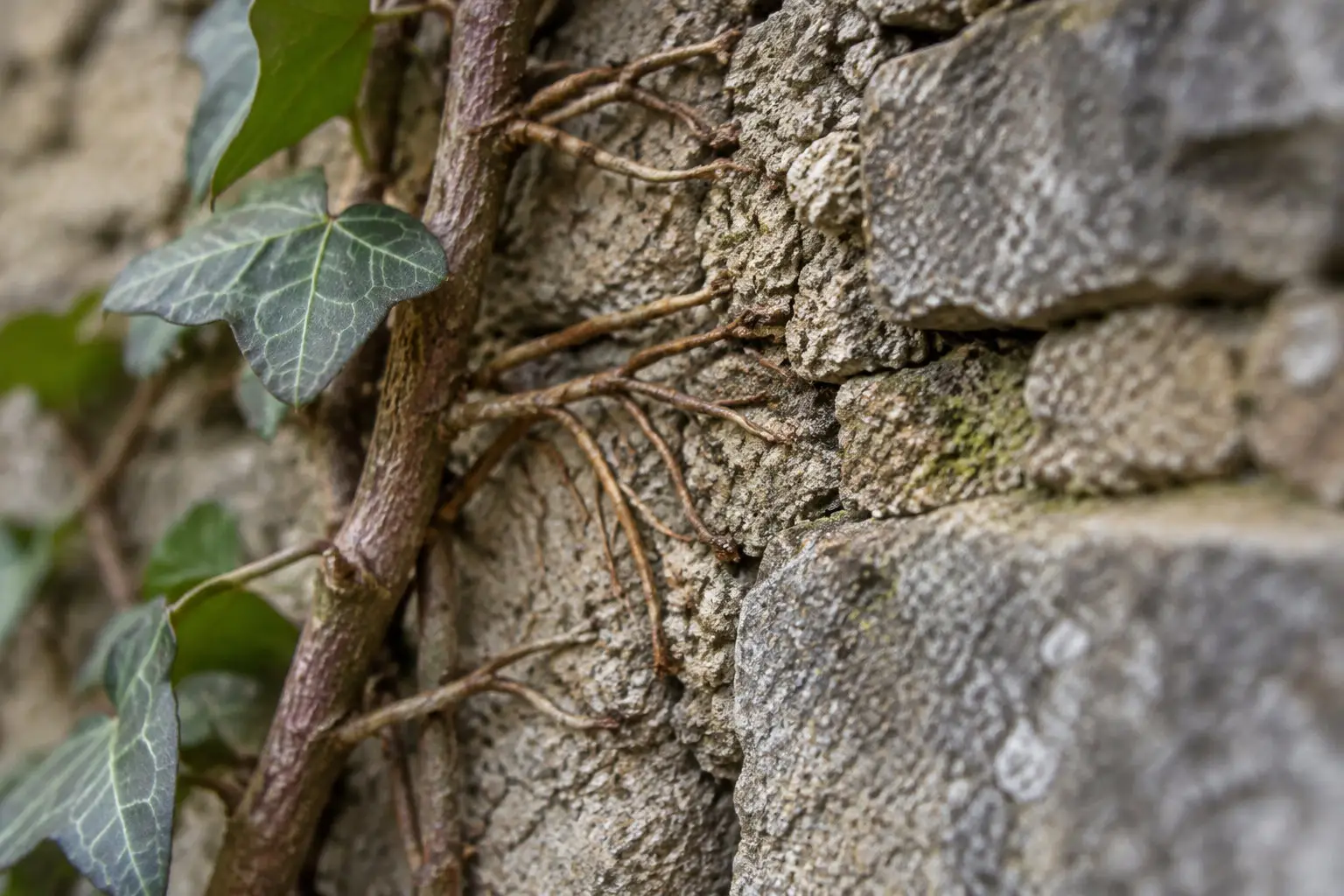
Do not shoot at the stems. On a friable joint or a fragile coating, pulling on the wire will strip the coating off. Instead, cut the wires at the base, let the attached part dry, and then peel it off in small sections. To learn more about the protective role of wire, see How ivy protects a well-maintained wall.
Which vine to choose based on the height and exposure of the wall
Ivy appreciates shade and partial shade, and most green-foliaged varieties of ivy enjoy it without difficulty. Hedera helix Prefers neutral to limestone soils and thrives in contact with lime mortars; in acidic soil, it grows a little less vigorously. Hedera hibernica and Hedera colchica they grow well in acidic soil.
For a great wall: the Irish fern
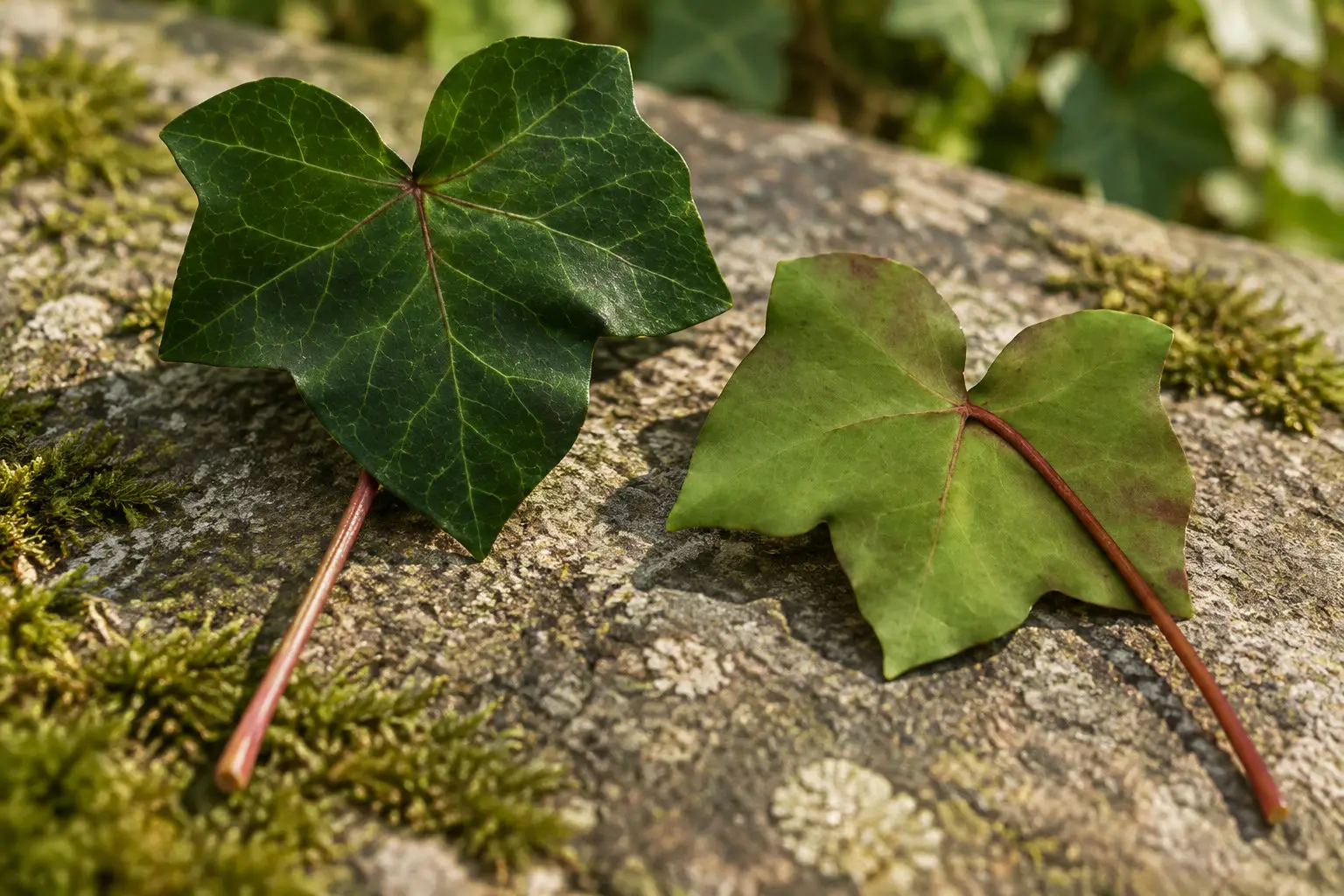
Hedera hibernica, The Irish leek is a species in its own right, more vigorous than Hedera helix And with faster growth. Its leaves, with five triangular lobes, thick and slightly concave, measure 5 to 9 cm long by 8 to 12 cm wide. It is an excellent climbing plant, which quickly covers large areas.
This vigor requires an annual pruning: without it, the ivy will invade the roof and the openings. To learn more about the species, see the Irish heather ; for quick coverage, the fast-growing crops.
For a limited area or surface: branched cultivars
The Pittsburgh-type cultivars, which are very branched, form a dense cover on a small area.
‘Goldchild’
Leaves with three or five lobes, up to 4 × 5 cm, grey-green with wide yellow margins. Branchy, fast-growing, sunny exposure. AGM (H5). In cold regions, prefer a sheltered location.
‘Eva’
Small bird-shaped leaves, variegated, 2.5 × 3.5 cm or less. Branchy habit; it climbs well on walls and fences.
‘Needlepoint’ and ‘Pittsburgh’
Two leafy green bushes, with leaves 4 × 4 cm and 5 × 6 cm at most, which are well suited for walls.
‘Ivalace’
Green leaves with five lobes and jagged edges, with a spreading stem. A good choice for decorating a stone wall.
For a sunny or very cold wall
‘Oro di Bogliasco’, better known as ‘Goldheart’, tolerates full sun well and climbs on a variety of supports; remove the completely green branches that sometimes appear without delay. ‘Baltica’, Discovered in 1907 near Riga, on the Baltic coast, it stands out for its significantly greater resistance to cold than that of common ivy; its dark green foliage with three lobes grows quickly, from the sun to the shade.
| Criterion | Hedera hibernica | ‘Goldchild’ | ‘Baltica’ |
|---|---|---|---|
| Surface targeted | Great wall | Muret, small area | Wall exposed to the cold |
| Exhibition | Shades and half-shades | Sun, shelter in a cold region | Sun in the shade |
| Foliage | Green, 5 lobes, large leaves | Green-grey bordered with yellow, 4 × 5 cm maximum | Dark green, 3 lobes |
| Asset | Quick cover, acidic soil accepted | Dense cover, AGM (H5) | Very rustic |
For a wall in full sun, see also varieties that tolerate full sun ; for foliage that colors in winter, the red-leaved ivy in winter.
Planting and guiding the ivy at the foot of the wall
Plant the ivy as close as possible to the wall, To ensure that the new shoots can attach themselves quickly, firmly fix the long stems already present on the plant in order to launch the cover.
- Check the wallStable stones, full joints, no active cracks. Also look for gutters, tiles, windows, shutters and cables, which will require regular measurements.
- Choosing the periodAutumn and spring remain the best seasons. A container plant can be planted all year round in frost-free conditions; in summer, water it before and after planting, then regularly until autumn.
- Prepare the holeA hole twice the size of the pot. If the soil is very dry, water abundantly the day before.
- PlantingLightly loosen the soil to encourage the roots to spread, cover with good soil and water.
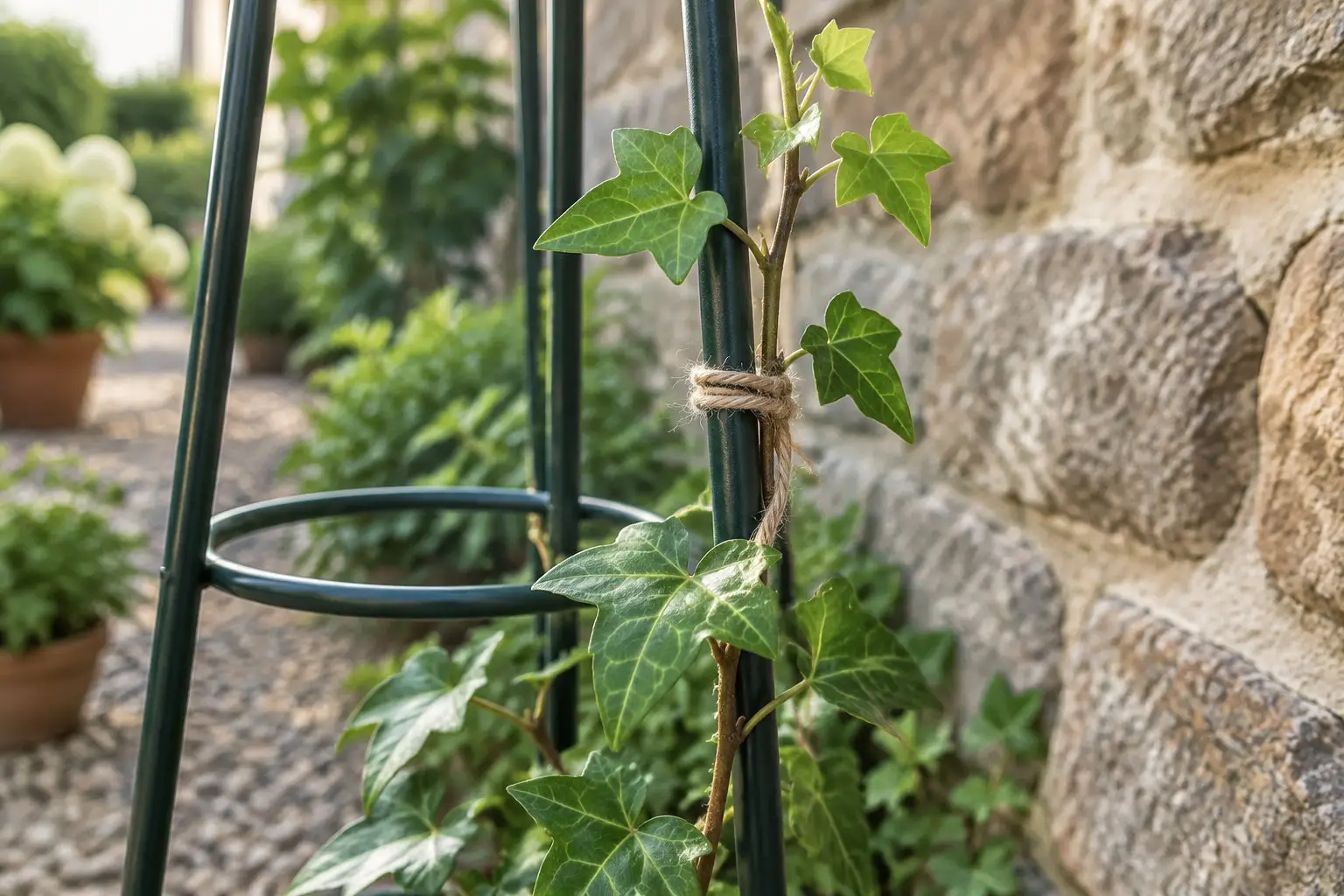
- GuiderGuide and attach the rods to the wall or trellis until the crampons take over.
A trellis removed from the wall Avoid any contact with a fragile wall. Place it a few centimeters from the masonry, held by feet firmly fixed in the mortar joints. Wide, spaced wooden slats, treated with a preservative product, suffice.
Liriope takes some time to take root, longer than for wild vines. Once established, some species grow 10 cm in fifteen days. Species with large leaves, such as Hedera colchica or Hedera algeriensis, They settle more slowly still.
Don’t fight against a wall that’s crumbling. The lierre would accelerate its degradation.
Cut, monitor and, if necessary, remove the weeds
The main drawback of ivy on a wall is its continuous expansion. One size per year, preferably at the end of winter, Keep the cover under control; a large cover may require an additional pass in the summer.
- Shorten the shoots of the year at least half, just above a bud, and remove the stems that overlap.
- Unraveling the stems who no longer hold on to the wall.
- Lighten the summit: A too loaded head, or sprawling adult shoots, can pull the cover off its support under its own weight. Hedera colchica, The area where there are few crampons is particularly sensitive to strong winds.
- Removing guttering, tiles, shutters and openings: The stems slip in there and can lift poorly fixed items.
- Remove the atypical shoots of a mixed cultivar, which would eventually dominate.
- Wearing gloves The dust and debris released during cutting irritate the skin.
An excessively developed lierre supports severe growth of the old branches, up to 30 cm from the ground: the new shoots sprout again the following season and grow in order to fill in the gaps.
The ivy feeds insects and birds: do not pluck it by reflex. Intervention is necessary in three cases:
Openings and roof
The stems go under the tiles, block a gutter or interfere with shutters and windows: cut them off before they reach them.
Nearby plants
The ivy grows into the massifs and deprives the plants of light: cut the stems that protrude from the wall.
Degraded masonry
Moving stones, crumbling joints, widening cracks: cut the ivy and have the wall examined before letting it grow back.
To remove them, cut the stems near the ground, let the attached parts dry, then tear them off without pulling. The fine lateral stems Hedera helix, They are very rich in crampons, break easily and can take root again if left on the ground; the covering of Hedera hibernica Larger leaves are easier to remove. If you prefer a stand-alone support, see How to create a honeysuckle hedge on a trellis.
Liric grass covers a retaining wall without damaging it if the masonry is already sound: its stakes stick, they do not nourish the plant. The real risks are the gaps left open and the size forgotten. Check the stones and joints, measure the surface to be covered, then choose the species or cultivar.
Frequently asked questions
Does the climbing ivy grow fast on a wall?
It takes some time for it to settle down first, but some species grow 10 cm in fifteen days during the peak season. Hedera hibernica is the fastest way to cover a large wall; species with large leaves establish themselves more slowly.
Should the ivy on a retaining wall be removed?
No, if the wall is sound and the slate trimmed every year. Cut it and have the masonry checked as soon as the joints crack, stones move or cracks widen: the state of the wall decides, not the plant.
Does the ivy make the wall damp?
No. The foliage protects the surface from the pounding rain and the roots dry out the soil at the foot of the wall; measurements have shown no increase in moisture in the coatings under a cover of ivy. A dry wall remains so before planting.
Which vine should be planted against a wall in the shade?
A green-leaved lierre: Hedera hibernica For a large area, ‘Pittsburgh’ or ‘Needlepoint’ for a wall. ‘Goldchild’, mixed, is more suitable for sunny walls.
 Français
 English (UK)
 Deutsch
 Nederlands
 Italiano