
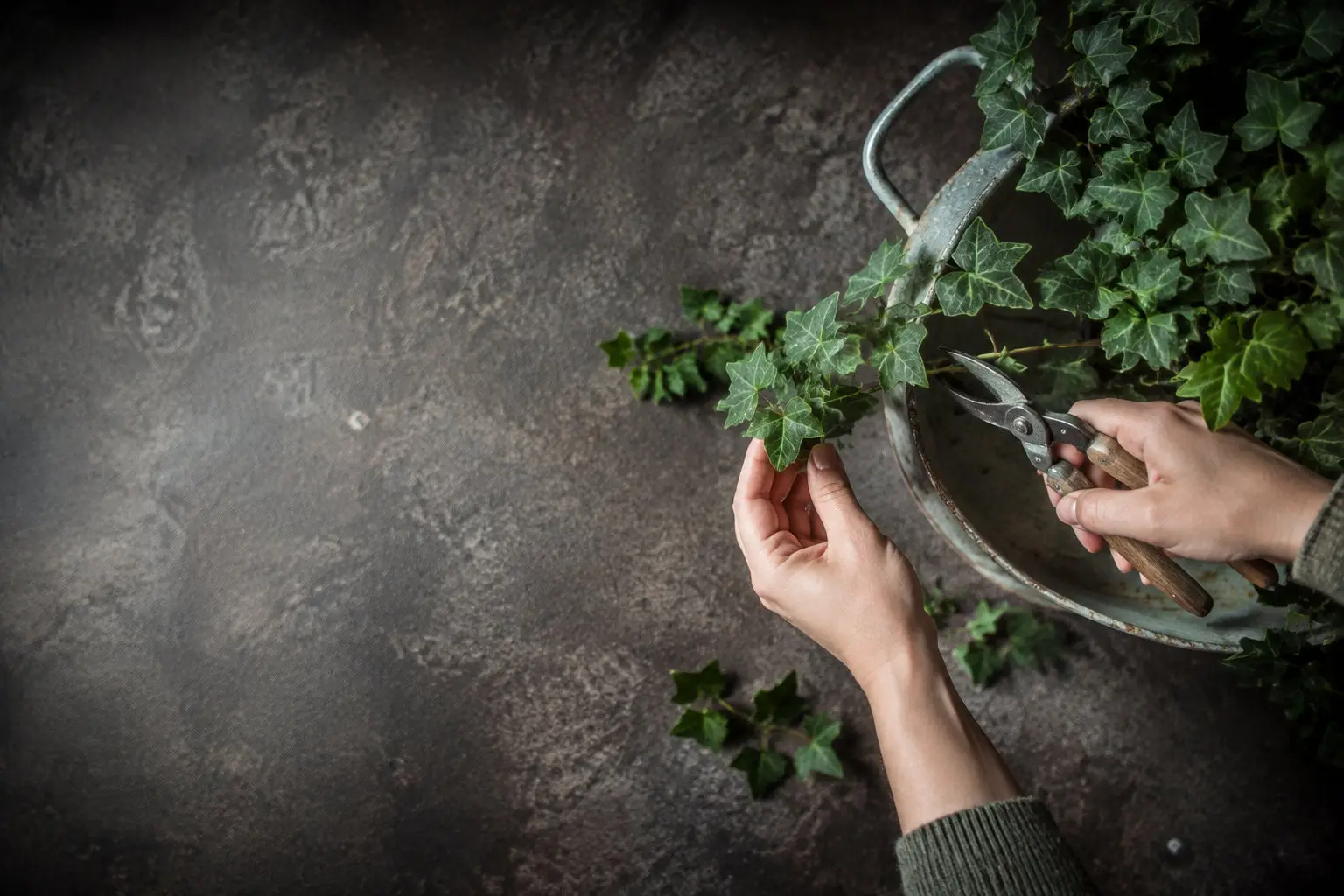
When and how to prune the ivy without damaging it
The ivy grows almost all year round and does not restrict itself. However, when properly cared for, it withstands severe pruning and recovers quickly. Everything depends on the chosen moment, the precision of the action and the use: wall, ground cover, pot or shrub form.
- Cutting. The end of winter is the time to prioritize, unless there is frost.
- Shorten it. The shoots of the year are cut off at least half of the way, just above a bud.
- Discount. An invasive perennial tolerates a cut at 30 cm from the ground and regrows the next season.
- Clear out. Guttering, tiles, shutters and windows are released with each size.
- Save money. Part of the adult stems remain in place for their flowers and berries.
The right time: the end of winter, except for the frosts
The ivy is pruned practically all year round, except during periods of frost. The period to be preferred remains the end of winter, Just before the vegetation resumes: in spring, the plant re-grows on its own support structure, and the new shoots quickly fill in the gaps.
This annual size is generally sufficient to contain a planted hedge. Very vigorous plants, as well as topiary, hedges and shrubby hedges, receive a summer touch-up on the shoots of the year to maintain a neat outline.
A subject that has been overdeveloped also dies back at the end of the winter. Ivy responds well to severe cuts in the old wood, that is, the old, hardened, brown stems: it tolerates being brought back to 30 cm from the ground. The new shoots resume growth during the season and grow out to fill in the gaps; in the second year, they are thinned by keeping the best ones to obtain a regular cover.
For variegated foliage like that of the variety ‘Brimstone’, The size is mainly used to remove the shoots that lose their shape. A dense mass of shrub ivy Requests more frequent touch-ups: a light, regular cut avoids having to tuck in.
Check before cutting. The schedule varies depending on the region and the year. No marked frost should be announced in the following days, and the foliage must be inspected: birds readily nest in the nests covering the walls.
Distinguish young stems and adult stems before cutting them
The fern has two types of stems. The young stems creep or climb thanks to their crampon-like roots and bear lobed leaves, with three or five lobes. Hedera helix. When they reach a height near the light, the stems straighten out, become arboreal and bear whole, oval, dark green and often glossy leaves: this is the adult form, the only one that flowers.
Removing all the adult stems means removing the flowers and berries. The flowers open from late summer to autumn, sometimes until the beginning of winter depending on the climate, at a time when few other plants offer nectar. The berries ripen in winter and spring and feed blackbirds, gulls, red-necked geese, black-headed owls and pied pigeons. On a English ivy in a sunshade, Since it remains almost entirely juvenile, the question arises little.
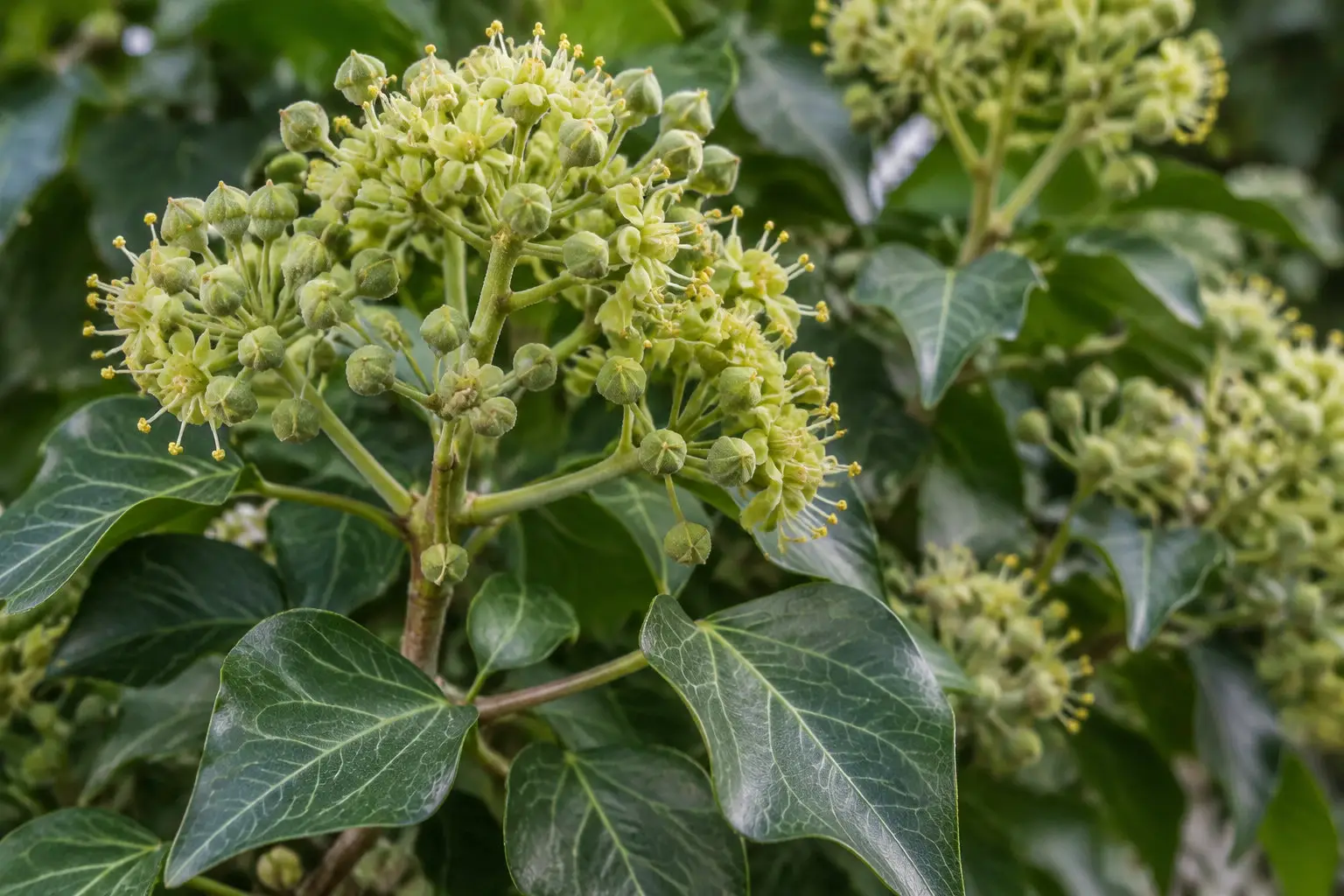
Regular pruning also affects the appearance: cutting back the shoots each year keeps the ivy in its juvenile, climbing, lobed form. This is the method to follow to preserve the character of a cultivar with cut or variegated leaves.
Size at the end of winter: the right choice
The plant immediately regrows on cleared ground, and the spring shoots fill in the gaps left by the cutting. The berries are then ripe: by sparing part of the adult stems, you leave them for the birds.
Size in autumn: to avoid
Cutting at this time removes the ovaries in full bloom, one of the last nectar resources of the year for bees, wasps, bumblebees and butterflies, as well as the berries of the following winter.
The large-scale gestures, from the hedge trimmer to the hedge trimmer
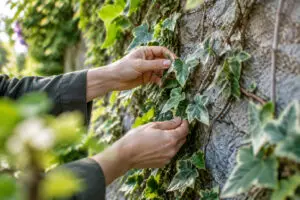
For a few stems and on a climbing plant, the secateur remains the most precise tool. The cut is made just above a bud or a leaf, with a clean and well-sharpened blade that cuts cleanly without crushing the stem.
On a large sun canopy or a willow leading into a hedge, The shears or the hedge trimmer save time. On a wall or trellis, a secateur remains preferable: it allows you to select each stem.
The classic maintenance measure consists of shortening all the shoots from the year by at least half, then removing completely the too tight shoots that overlap. The stems detached from their support are then removed.
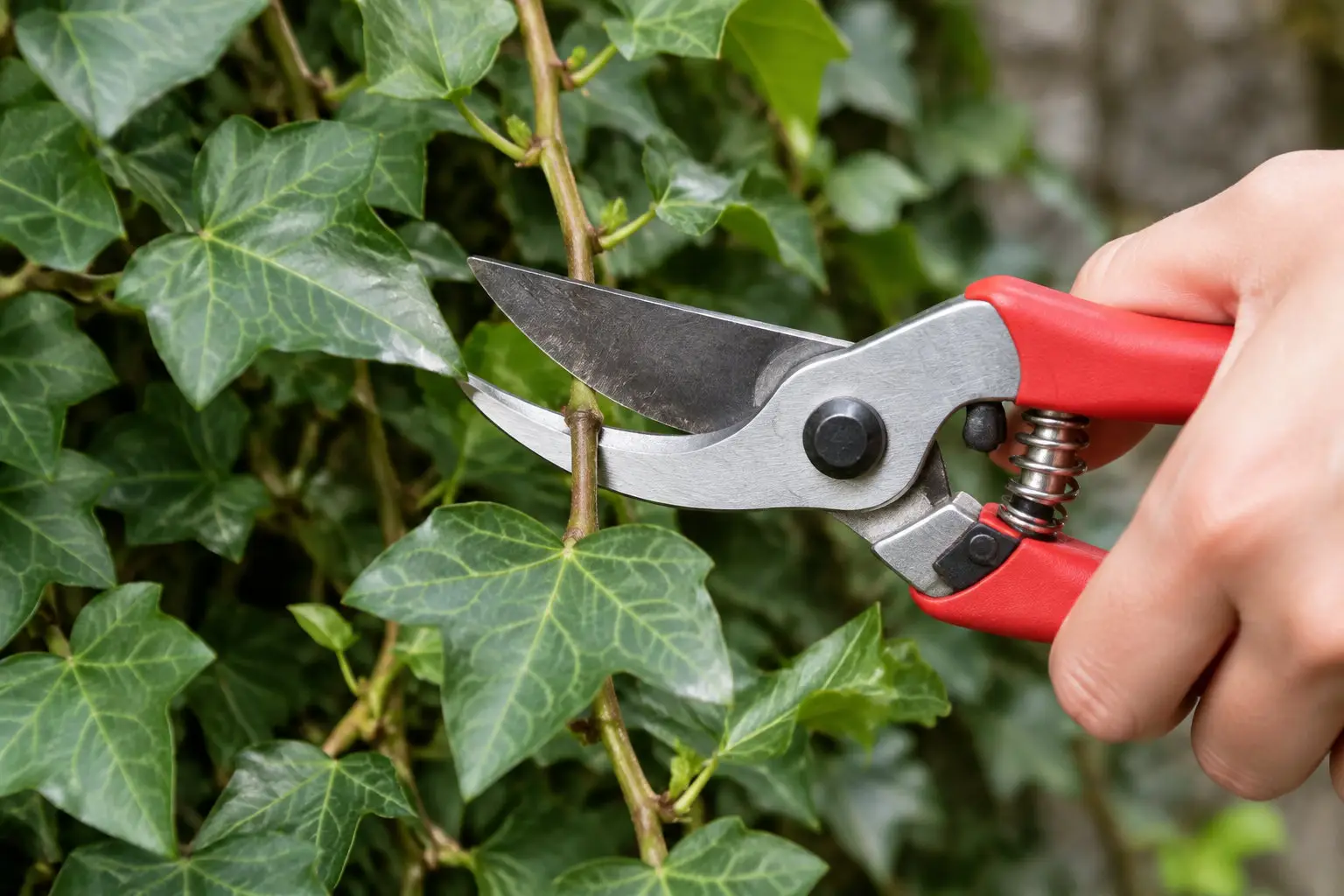
- Prick the young plantsAfter planting, removing the tender end of the stems stimulates branching. In vines that branch poorly, this action provides a denser cover.
- Shorten the shootsEvery year, at the end of winter, the shoots from the previous year are cut off at least half of them, just above a bud.
- ClarifyThe stems that are too tight or overlap each other are removed at the base.
- Discount if necessaryAn overgrown plant returns in one go, up to 30 cm from the ground, rather than in small, successive cuts.
Protecting oneself. On old linen, the size of the fabric releases dust, debris and plant hairs that can irritate the skin: gloves and long sleeves are recommended, and the skin is washed with soapy water after contact with the sap.
For a trellis hedge, the young stems first orient themselves within the meshes before any pruning: see How to guide the young stems towards the meshes.
Adapting the size to the use and variety
On a wall, ivy clings to its roots with crampons that neither absorb water nor food: they serve only to fix it in place. A healthy and well-maintained wall can therefore be covered without damage. A wall whose plaster is deteriorating, on the other hand, is not suitable: the stems penetrate into the smallest cracks.
The clearance size is practiced at every pass The stems that grow into the gutters, tiles, shutters or windows are cut off before they settle there. A trellis placed a few centimeters from the wall offers a safer solution: the ivy clings to it instead of the facade.
A climber can also become too heavy at the top, when the size multiplies the ramifications or when adult stems develop there. These thick parts shrink so that the weight does not pull the plant from its support. Hedera colchica, The grass that has few cloven-hoofed roots is particularly vulnerable to being torn off by strong winds.
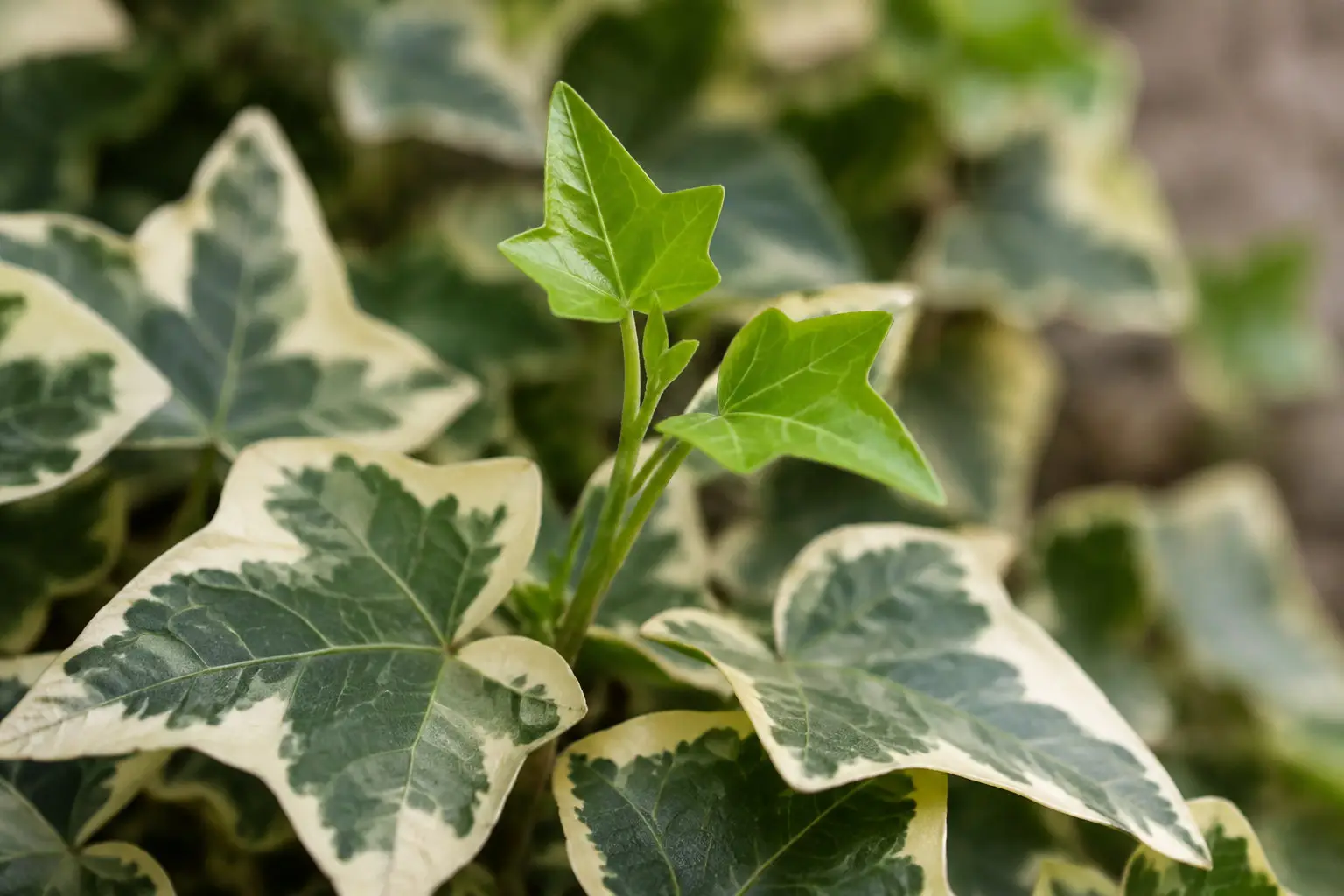
In variegated leathers, the shoots that revert to green or branch out of the type are removed as soon as they appear, otherwise they take over. ‘Goldheart’ This produces green branches that must be removed immediately. ‘Little Luzii’, ‘Königer’s Auslese’ and ‘Triton’ They are among the least stable cultivars.
‘Brimstone’, a mutation of ‘Gold Dust’ Discovered in Pennsylvania in 1989, it has wavy and grooved leaves, spotted with gold, green, and grey-green. It grows slowly and requires more cleaning than compression stockings.
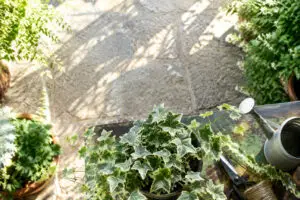
In pots, even the most vigorous plants contain themselves with regular spacing; to limit maintenance, it is better to choose from the outset among varieties adapted for gardeners, More compact.
| Criterion | Ground cover | In a pot | Variegated |
|---|---|---|---|
| Moment | End of winter | End of winter, retouching in the summer | As soon as an atypical growth spur appears |
| Gesture | Cut off the stems that come out of the desired area | Shorten the too long stems, pinch their ends | Remove the growing part that has returned to greenness to its base |
| Objective | Avoid letting the stems take root beyond the edge | Keep a compact and branched shape | Preserving the cultivar's character |
‘Arborescens’
‘Arborescens’ refers to the adult, bushy and non-climbing form of Hedera helix, It is produced from cuttings of mature stems. It bears many clusters followed by purple-black berries in autumn and winter. Its slow growth requires only the pruning of the shoots from the previous year.
‘Ice Cream’
Adult, slow-growing shrub with oval, pointed leaves marbled with green and grey, edged with cream white and tinged pink in cold weather. It thrives in mid-shade or partial shade and is trimmed slightly to maintain a compact shape.
Mistakes to avoid during sizing
An occupied nest reduces the size. Troglodytes, woodpeckers, red-crested and merle pheasants nest in the eaves of buildings from spring to summer: a final winter pruning usually takes place before nesting, but an inspection of the foliage remains necessary.
For the ornamental ivy ‘François Battet’, the Variety fiche Specify when to prune. In case of doubt about the timing, it’s better to wait: delaying pruning by a few weeks won’t harm the plant.
Three situations justify postponing the sizing:
- Gel announced: Wait for the skin to soften before cutting it.
- Flowering plants: Bees, wasps, syrphes and butterflies find there one of the last nectar sources of the year.
- Ripe berries: Merlins, Grays and Red-breasts feed on them during the winter, when food becomes scarce.
On a wall
First cut the stems with a secateur, then gradually peel off the bark using a screwdriver or chisel, leaving the woody branches intact.
Pulling it off at once
Shooting at an entire plate ruins the coating or paint. On the ground, the fine lateral stems that have already taken root Hedera helix They break and go away if they remain in place.
On a sturdy tree
The lierre is not a parasite: it rarely settles on a growing tree and can remain there under surveillance.
On a weakened tree
Abundant, the ivy thickens the branches, encourages their breaking off and competes with the roots: it can hasten the decline of a tree that is already fragile. It is better then to prune it.
Cut the ivy in late winter, out of frost, by shortening the shoots from the previous year by half above a bud. An invasive plant grows in one go up to 30 cm tall. Clear gutters and roofs every time you pass by, remove the green shoots on the branches and leave part of the adult stems for their flowers and berries.
Frequently asked questions
When to prune the ivy?
Preferably at the end of winter, just before the vegetation starts to grow again, and outside of freezing weather periods. Topiary, hedges and ornamental shrubs can be given a touch-up in the summer.
Can a very short reed be bent?
Yes. The willow recovers well from the old wood and tolerates a cut at 30 cm from the ground. The new shoots sprout again the following season; they are thinned the second year.
Should the ivy on a tree be removed?
Not on a vigorous tree, so that the ivy does not become a parasite. On a weakened tree, however, its weight and the competition from its roots can hasten its decline: it is better to prune it then.
Can you leave ivy on a wall?
Yes, on sound and well-maintained masonry: its crampon-like roots serve only to fix it in place. On a crumbling plaster, it insinuates itself into the cracks. In all cases, the rods that approach the gutters, tiles and openings cut themselves off every time they are trimmed.
 Français
 English (UK)
 Deutsch
 Nederlands
 Italiano