
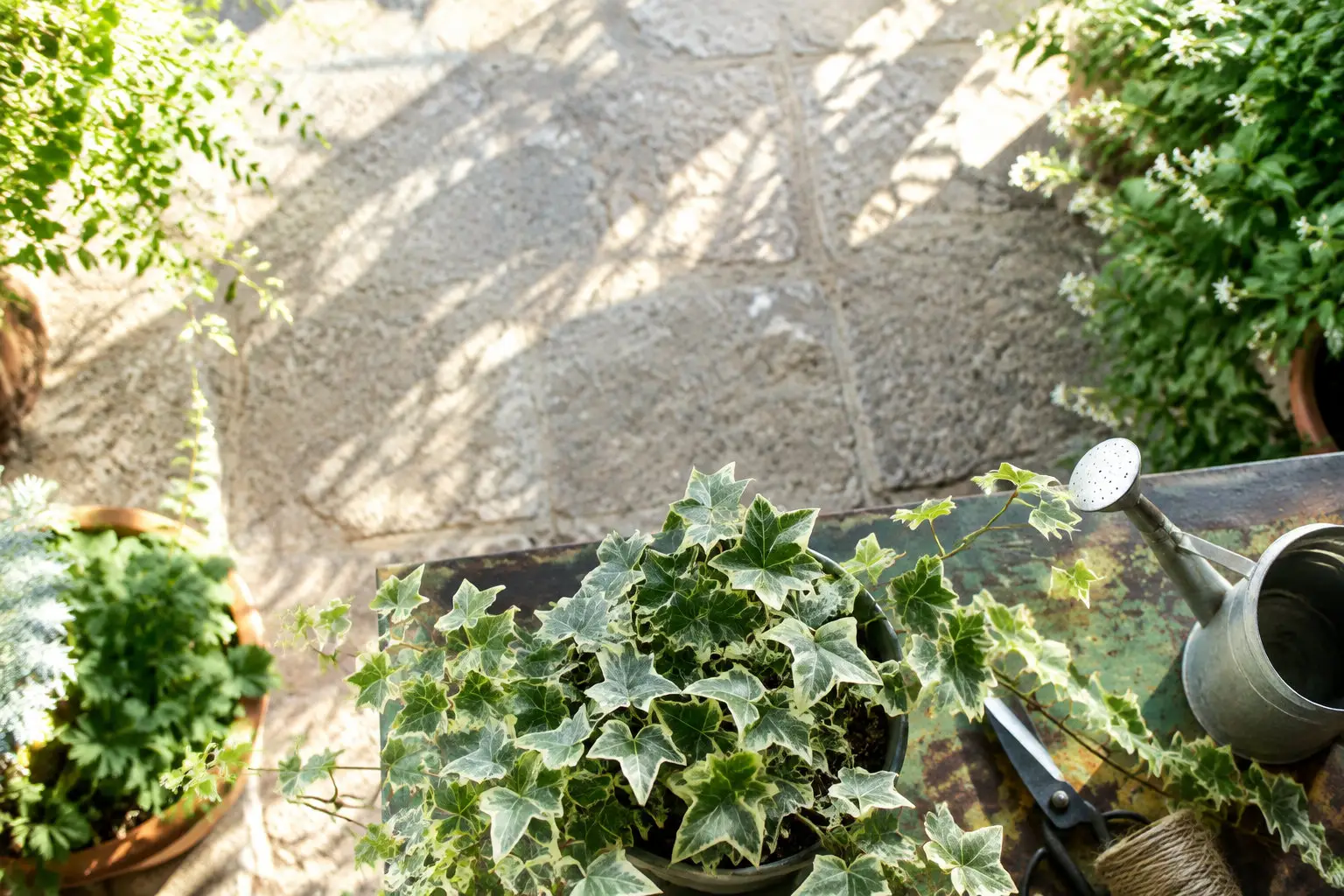
Mixed shades for the shade: our selection
The vines tolerate shade remarkably well, but not all varieties are suitable for being planted under a tree or against a north-facing wall. Some cultivars are made for partial shade, or even full shade; others, such as ‘Goldchild’, They give the sun its most beautiful colors. The choice is made based on the recommended exposure, vigor, leaf size, and intended use.
- Choosing. For the shadow, ‘Dentata Variegata’ Still the safest combination; ‘Goldchild’ prefers the sun.
- Check. Several trade names are synonyms: ‘Goldheart’ is ‘Oro di Bogliasco’, ‘Paddy’s Pride’ is ‘Sulphur Heart’.
- Delete. The shoots that have returned to green life, more vigorous, must be cut as soon as they appear.
- To limp. The stakes of Colchide have few spikes: a trellis and ties hold them in place.
- Controlling. A healthy wall supports the ivy; a cracked wall or a friable coating, not.
What light changes for a variegated iris
A variegated leaf has lost part of its chlorophyll, the pigment that ensures photosynthesis. Therefore, it is more fragile and grows more slowly than a green leaf. The white areas come from plastids without pigment, the yellow areas from yellow or orange pigments.
The genre Hedera It supports deep shade, which distinguishes it from most climbers. It also grows very well in full sun. The exposure is therefore chosen primarily for the appearance of the foliage.
An intense sun illuminates the discolored parts, because the pigments degrade under strong light. Conversely, too dense shading slows down very variegated cultivars, already less vigorous. For foliage with white borders, see also the white variegated foliage fern.
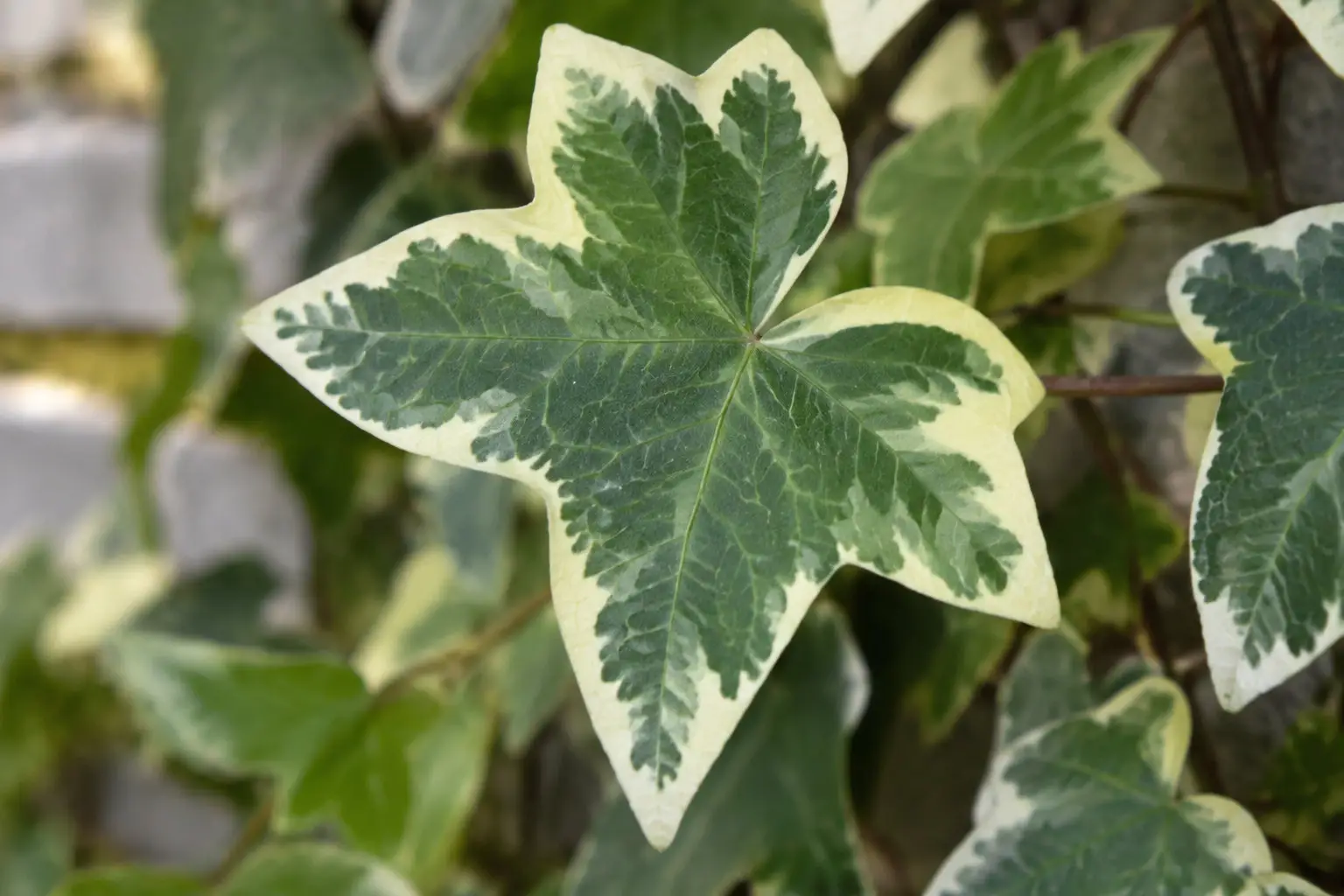
Shaded or green. In mid-shade, most pansies are suitable. For a thick shade, choose a variety known for this exposure, such as ‘Dentata Variegata’, or a green heather. Sun-grown cultivars such as ‘Goldchild’ should be avoided in these locations.
Which variegated varieties to choose for mid-shade and shade
The vineyards of Colchide and ‘Oro di Bogliasco’
Three large shrubs dominate the shaded plantations. Two are colchide lierres (Hedera colchica), the third is a Hedera helix sold under the name ‘Goldheart’, whose correct name is ‘Oro di Bogliasco’.
| Criterion | ‘Dentata Variegata’ | ‘Sulphur Heart’ | ‘Oro di Bogliasco’ |
|---|---|---|---|
| Species | H. colchica | H. colchica | H. helix |
| Panachure | Grey-green center, cream-white margin with yellowish tinge | Yellow center with chartreuse green | Yellow center with golden border, dark green edge |
| Maximum sheet | 20 × 12 cm, full size | 13 × 12 cm, barely lobed | 6 × 6 cm, 3 to 5 lobes |
| Recommended exhibition | Half-shade to shadow | Sunlight, with a hint of shade | Sunlight, with a hint of shade |
| Growth | Medium | Average to rapid | Average to slow, slow to settle in |
| Surface covered by a foot | 6 to 8 m² | Not specified | 3 to 4 m² |
| Distinction | AGM (H5), 1993 | AGM (H5), 1993 | — |
‘Dentata Variegata’ is the variegated variety best suited to shade Its large leaves, edged in light cream, brighten a dark corner of the garden. It is, however, afraid of stagnant moisture at the base.
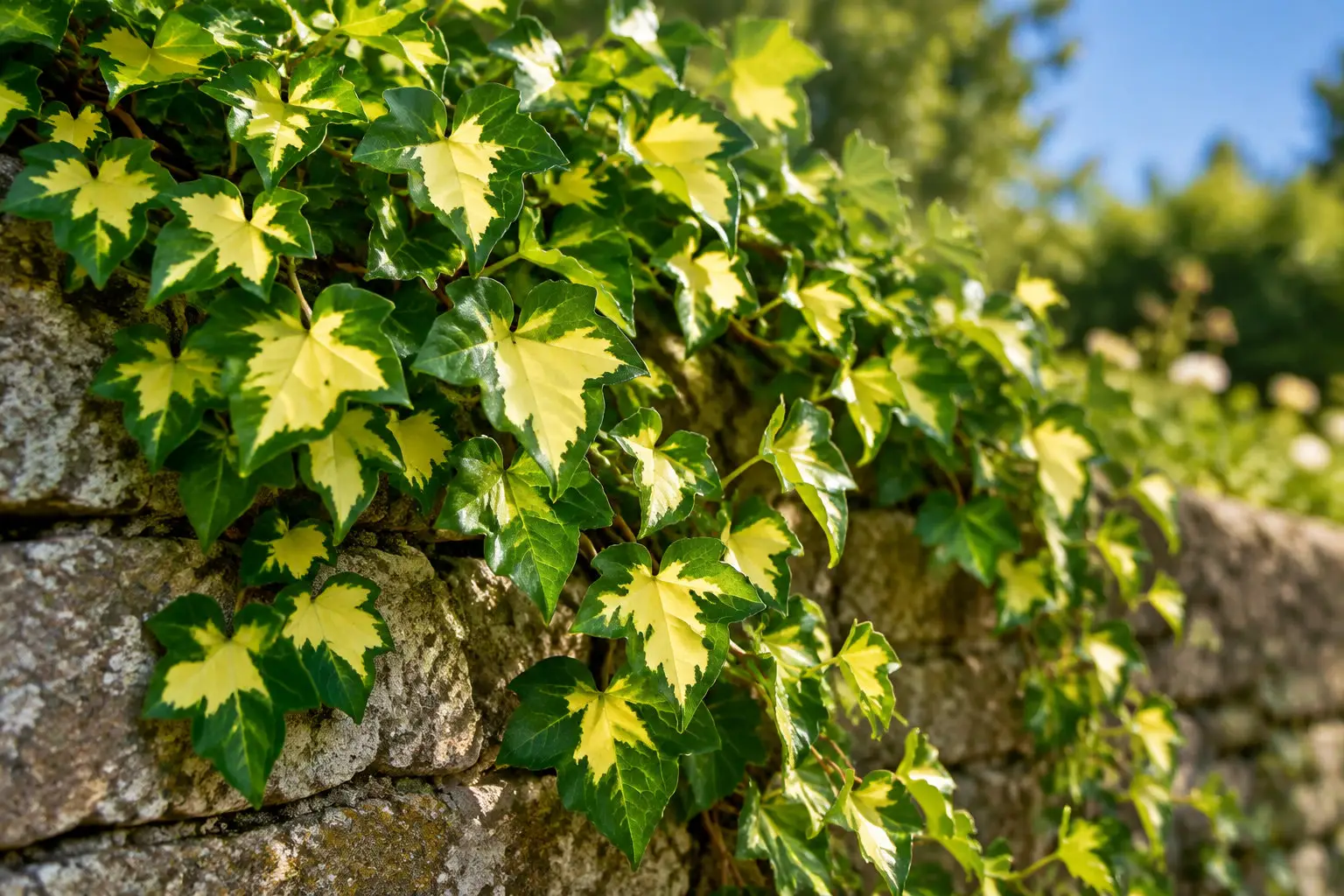
‘Sulphur Heart’ and ‘Oro di Bogliasco’ have a central yellow area, which is brighter in the mid-shade than in dense shade. ‘Oro di Bogliasco’ often produces green branches, which should be removed immediately.
The medium-sized assortments
‘Marginata Elegantissima’
Part of the Elegantissima group, known since the 19th century. Leaves are grey-green with a wide cream or white margin, tinted pink in cold weather. Slow growth; best in partial shade: a good choice for a pot or small container.
‘White Ripple’
Pittsburgh-type branching fern, with fan-shaped leaves of 3 to 5 narrow lobes (sometimes 7), edged with white, up to 5 cm long. Recorded in the Netherlands in 1996.
‘Golden Starlight’
Mutation of ‘Goldchild’ discovered in Denmark in 1998, with elongated lobes and pointed tips edged in yellow. Rapid growth, half-shade sun. It sometimes returns to ‘Goldchild’. ‘Yellow Ripple’ and ‘Gold Ripple’ are synonyms.
‘Goldchild’
Excellent lierre (AGM H5, 1993), with leaves of 3 to 5 lobes edged with yellow, but recommended for full sun and rapid growth; it is not suitable for a shady mass. ; ‘Yellow Frisian’, which is derived from it, falls under the same usage.
For a marked shadow, ‘Bruder Ingobert’ (often sold under the name ‘Ingobert’), a mutation of ‘Glacier’ With its marbled leaves of white and cream, it prefers to grow in shaded areas. Other varieties are included in the selection. shades for the mid-shade.
Check the name before buying. There are many synonyms in the variegated varieties. ‘Paddy’s Pride’, ‘Gold Leaf’ or ‘Dentata Aurea-striata’ designate ‘Sulphur Heart’; ‘Goldheart’ and ‘Jubilee’ designate ‘Oro di Bogliasco’; ‘Gold Baby’ designates ‘Goldchild’. A plant labeled with the species and cultivar avoids confusion with other plants. H. colchica large leaves with a H. helix.
Climbing plant, ground cover or pot: the use guides the choice
Climbing on a wall or trellis
Plant as close as possible to the support and fix the existing long stems: the new shoots will then attach more quickly. Ivy often takes some time to take off before it picks up speed.
The boots of Colchide have few cleats on thick stems: their mass can be detached by strong winds. A trellis and regular ties hold them in place. ‘Sulphur Heart’ climbs well if it is helped initially; ‘Oro di Bogliasco’ covers various supports once installed.
Covering the ground in the shade
Hedera colchica It adapts particularly well to the thick shade of trees and to wet ground, and forms a dense carpet of large leaves that is effective in deterring spontaneous growth. Its sprawling stems take root in contact with the soil, This extends the plantation year after year.
- Clearing the areaEliminate any unwanted weeds that might be growing through the carpet of leaves.
- PreparePrepare the soil and add a little soil or slow-release fertilizer.
- PlantingOne foot every 60 cm in all directions, in the autumn or spring.
- AssociateSmall bulbs (scillas, muscaris, crocus) emerge from the ground in spring.
A behavior to be aware of. When grown in a greenhouse, ‘Sulphur Heart’ grows more easily into an adult, shrub-like form than most other varieties. ‘Oro di Bogliasco’ will willingly lose its variegation: reserve it for vertical supports.
Growing in a pot
A commercial soil is suitable. For a homemade mixture, count three-quarters of peat for one-quarter of limestone garden soil; ivy prefers a rather alkaline soil. Avoid substrates made solely of pine bark, as they are too poor.
Terracotta absorbs more water but is afraid of freezing; plastic retains more water, which can be corrected by adding sand or gravel. A pot left too long in the dry makes the plant suffer.
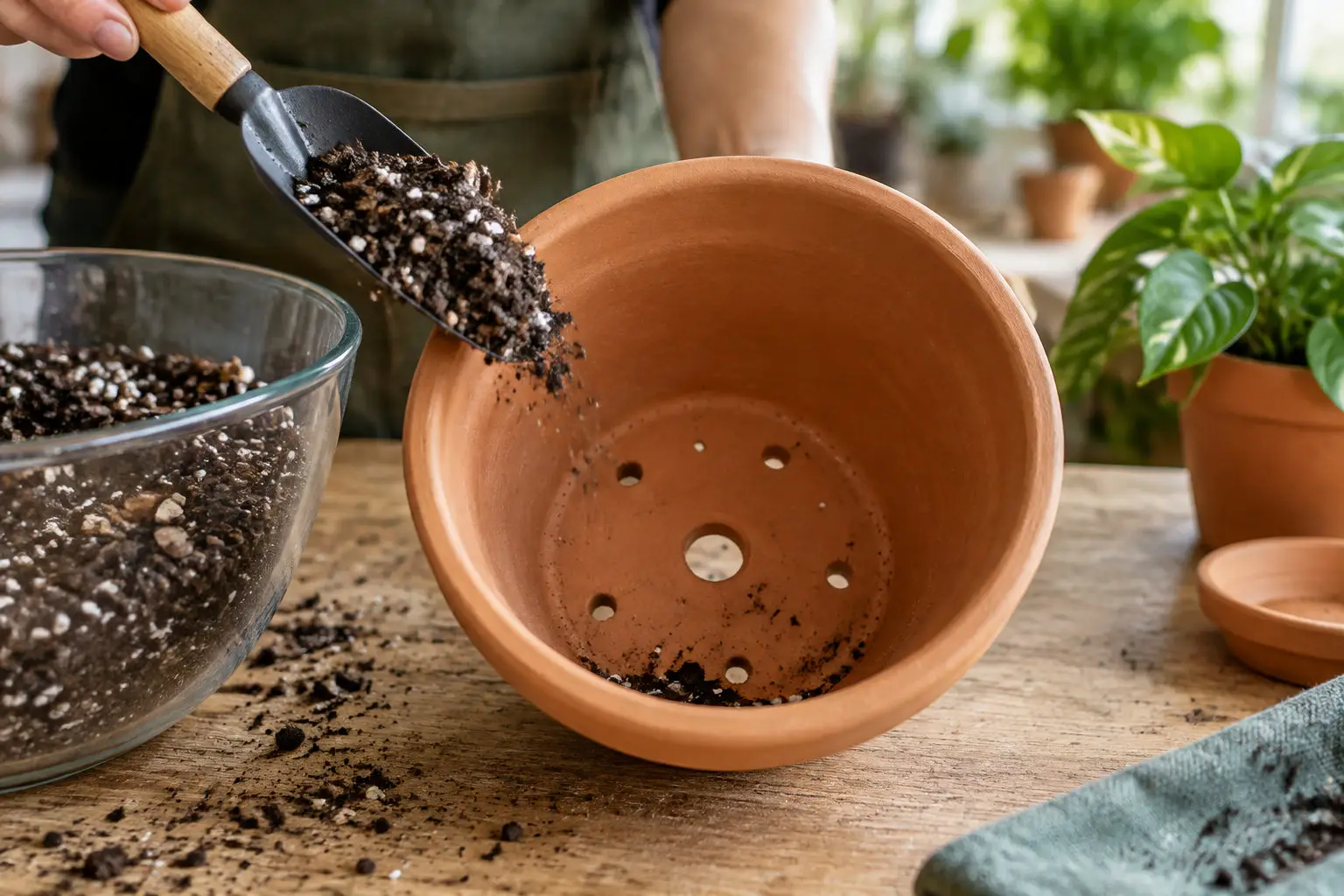
In pots, the otiorhynchus is the most serious pest: its white larvae eat the roots from September to March. A plant that does not regrow in the spring must be repotted and its roots examined. For a compact, green pot, ‘Bredon’, with small, curly leaves with 5 lobes, is featured in the selection Ropes for the shade ; for yellow foliage, see yellow variegated foliage.
Evaluating the light of the location
A simple check is enough to classify an area. Note the direct sun at three times of the day, ideally in summer:
- In the morning, if the sun touches the ground or the pot.
- At noon, then at the end of the afternoon, the same observation.
- The total number of hours: Less than 2 hours corresponds to shade, from 2 to 6 hours to mid-shade, according to a commonly accepted reference point.
Shadow
‘Dentata Variegata’, ‘Bruder Ingobert’ or a green heather.
Semi-shade
‘Marginata Elegantissima’, ‘Sulphur Heart’, ‘Golden Starlight’, ‘Oro di Bogliasco’.
Sun
‘Goldchild’, ‘Yellow Frisian’: see the fern for the sun.
A clear wall or a reflective surface provides indirect light that benefits the plantings. To quickly cover a large shaded area, the Quick-growing crops offer other options.
Size and maintenance: remove the branches that have returned to green
Fully green shoots grow more vigorously than mixed shoots. and they would eventually take over. Cut off the base as soon as they appear. The atypical shoots, all white or all yellow, are removed in the same way to keep the plant homogeneous.
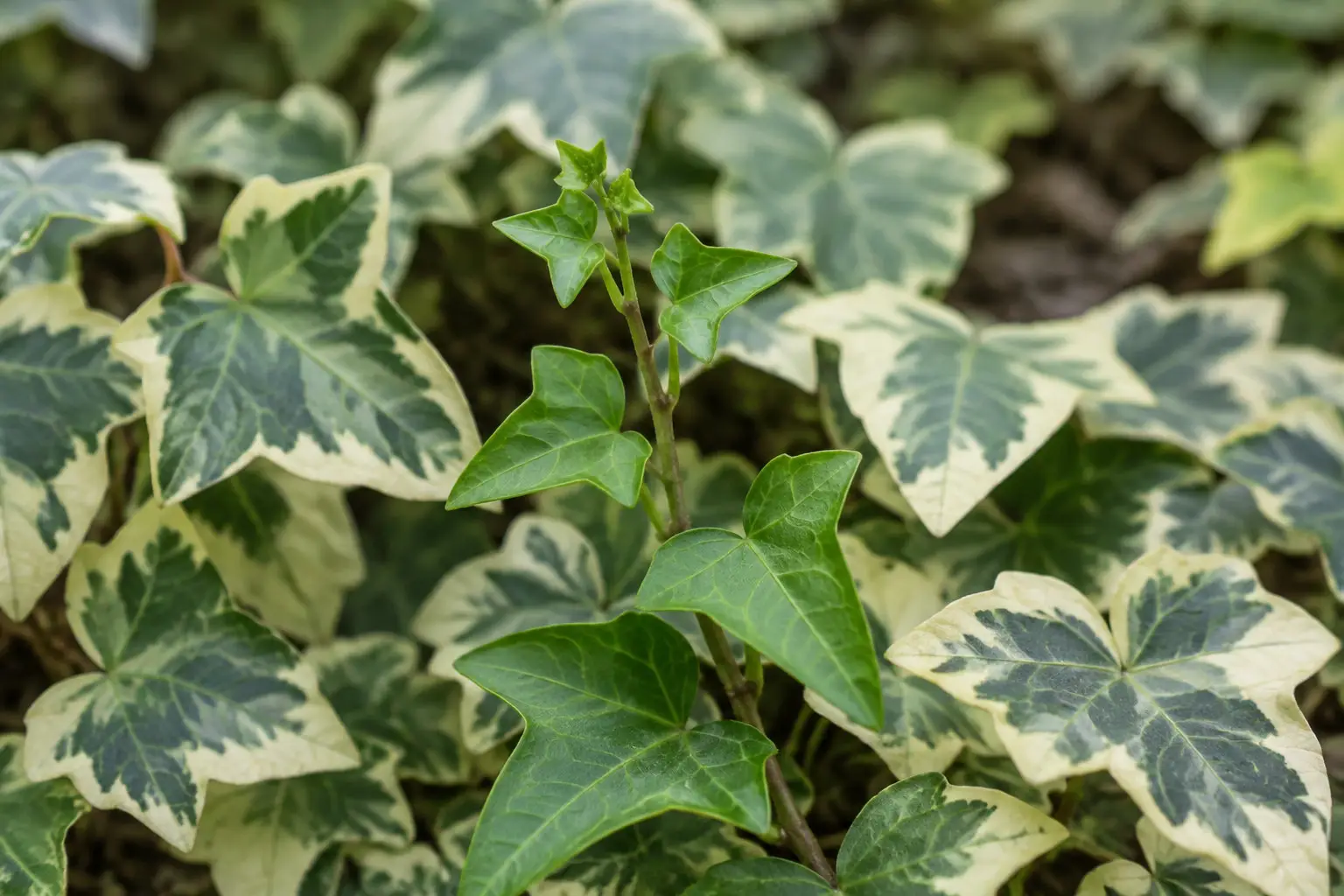
The annual size is taken at the end of winter, preferably. It consists of:
- shorten the shoots of the year at least half, just above a bud, to keep juvenile foliage; ;
- Remove the too tight stems or that overlap; ;
- lighten the summit of a climbing vine, whose weight can pull it off its support; ;
- clear gutters and roof of every movement that commits itself to it.
A second, slightly smaller size in summer keeps the cut shapes neat. A lush fern tolerates a severe cut well, up to 30 cm from the ground: the new shoots spring up again in the season and become dormant the following year. For older specimens, gloves protect against irritation caused by dust and the hairs on the foliage.
After a summer planting, water before and after, then regularly until autumn. For a mixed hedge, the plantation kit 10 linear meters resembles varieties with a moderate growth rate.
Walls, cleats and supports to prioritize
Claws are specialized adventitious roots that attach the stem to its support.
A healthy wall, with mortar in good condition, without cracks or moisture, supports the ivy without damage; its foliage even protects the facade from the pounding rain. A deteriorated wall or a plaster that is crumbling, on the other hand, should not be covered with ivy: the plant settles in the cracks and can knock stones off an old masonry that has not been maintained.
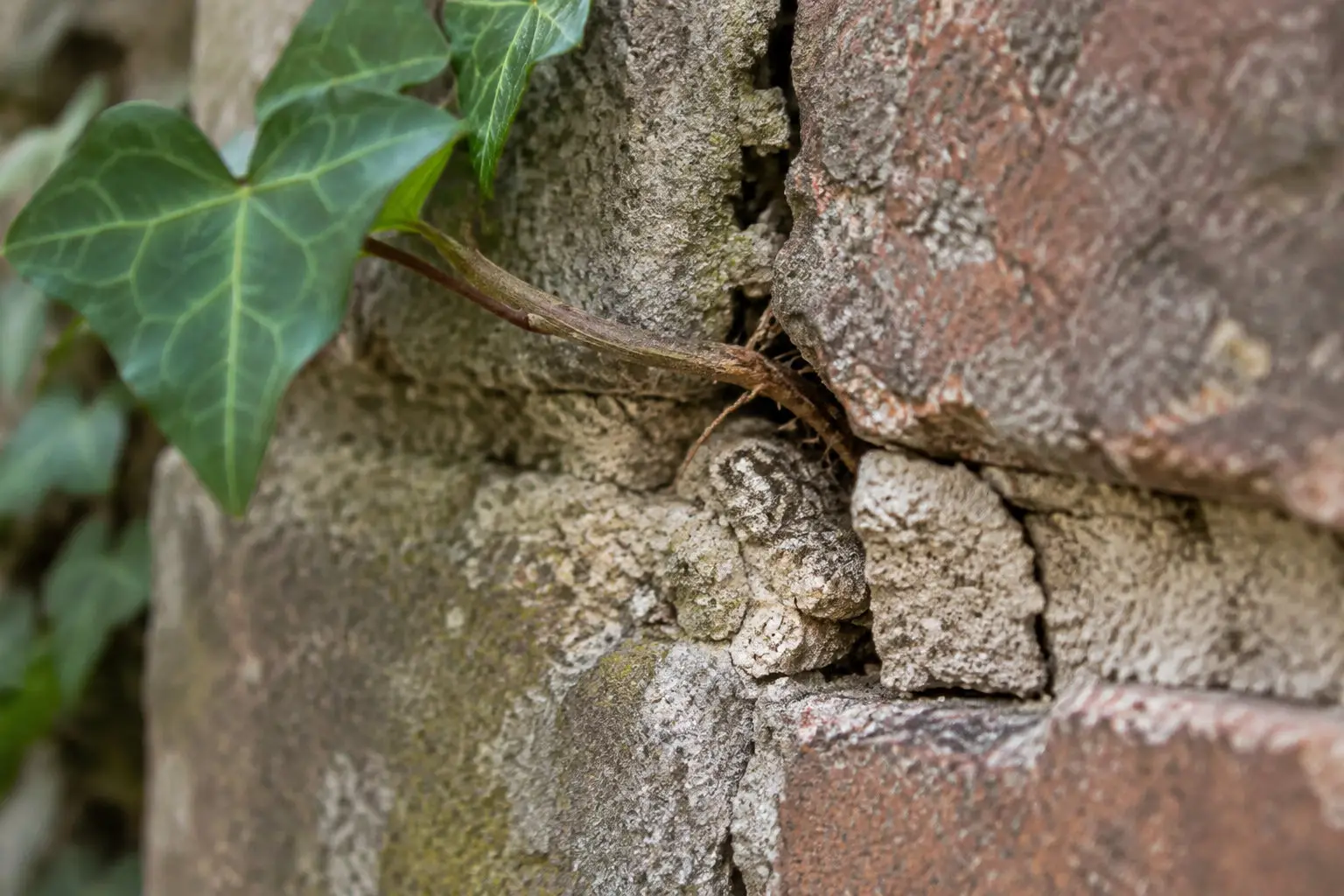
Before placing a support:
- Identify downpipes, gutters, tiles and shutters, where the shoots must not engage.
- Examine the wall: cracks, open joints, friable coating, moisture.
- Place a trellis A few centimeters from the wall, it is fixed by feet anchored in the joints; it also allows the facade to be rebuilt without having to tear down the plant.
- Guide the shoots according to the advice given for the climbing ivy.
In the shade, ‘Dentata Variegata’ is the most reliable variety; ‘Sulphur Heart’, ‘Oro di Bogliasco’ and ‘Marginata Elegantissima’ are suitable for mid-shade, ‘Goldchild’ for full sun. Check the exact cultivar name, prune the branches that have returned to green and prune the Colchide vines on a trellis in front of a healthy wall.
Frequently asked questions
What kind of hedge should be planted against a wall facing north?
‘Dentata Variegata’, recommended for half-shade to shade, is the safest. Its large leaves edged in cream light up the wall; plan to use trellises because this Colchide creeper doesn’t take well to support.
Which weed covers the largest area the fastest?
Hedera hibernica One foot can cover 8 to 10 m² and it quickly climbs on large surfaces. The rhizomes of Colchide form a thicker carpet but take longer to settle; among the variegated ones, one foot of ‘Dentata Variegata’ covers 6 to 8 m².
Can a variegated ivy be grown in a pot in the shade?
Yes, with a cultivar adapted to partial shade, such as ‘Marginata Elegantissima’, with a slow growth rate. A draining substrate, regular watering, and monitoring of the otiorhynchids in the autumn are sufficient.
Why does my variegated ivy turn green?
All panicles sometimes produce fully green branches that are more vigorous than the others. Cut them at the base as soon as they appear, otherwise they will take over the panicle.


 Français
 English (UK)
 Deutsch
 Nederlands
 Italiano