
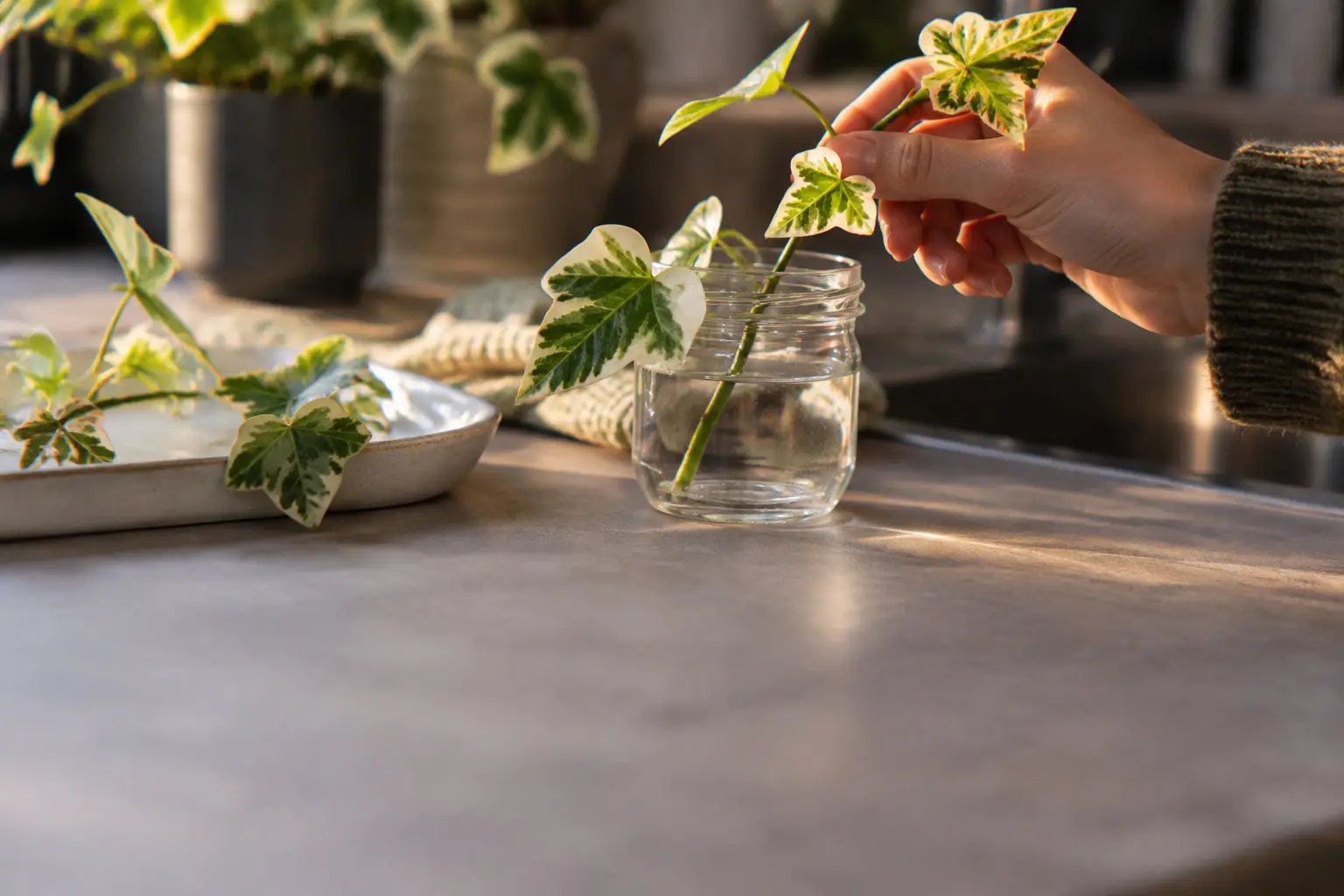
How to preserve rare ivy cuttings indoors
A rare plant cannot be preserved by keeping the same plant indefinitely. In a pot, its growth eventually stops; a plant that has reached maturity loses the characteristics of the cultivar, and a single pest can wipe out the entire crop in one winter. In reality, the plant is preserved by cuttings: you must choose the right stem, root it according to the species, then keep the collection and keep track of it.
- Renew it. A collection herb grown in a pot will re-bloom every year or every two years.
- Choosing. The stem must show the typical characteristics of the cultivar: a shoot that has returned to green remains green.
- Adapt. The cultivars of’Hedera helix they take root in the warmth; those of H. colchica, H. hibernica and H. rhombea, At the expense of.
- Expose. Bright light without direct sunlight, at a distance of 2 m from a window; 10 to 15 °C is sufficient.
- Labeling. Name, origin, number and date of arrival on each pot, and a separate logbook.
Why a rare species of heather is preserved by cuttings, and not by the plant itself
Keeping a rare cultivar in a pot means accepting that the mother plant won’t last. Three risks weigh on it, And the bouture answers all three.
Growth stops in a pot. The limited volume of soil eventually blocks the plant. In a collection grown in pots, each fern bush therefore reproduces every year or every two years, starting over with a young plant.
The adult form obliterates the cultivar. The fern has two forms: a juvenile, creeping or climbing form, with lobed leaves, and an adult, arboreal form, which flowers and bears whole leaves. Once adults, most clones cease producing juvenile shoots and lose the characteristics that distinguished them.
The otiorhynchus kills silently. In pots, it is by far the most serious pest. Its white larvae eat away the bark of the roots and the base of the stems, especially from September to March, and the plant often dies without any previous signs. If a honeysuckle does not regrow as expected in spring, examine its roots immediately: it is still time to collect cuttings from them. Our production methods are presented in How our vines are grown.
A collector's rule. Always keep at least one rooted cutting of each rare cultivar in a separate pot. If the mother plant dies, the cultivar remains in the collection.
Choosing the stem that really carries the cultivar
The graft reproduces exactly the stem taken from the parent plant, including any defects. The choice of the branch therefore matters more than the rooting technique.
The typical character first and foremost
In cultivars with cut or variegated leaves, select a shoot whose leaves show the typical character. A mutated or reverted shoot retains this atypical character by becoming a new plant. The history of hybrids provides examples: ‘Teena’, with small dark green leaves, is a green reversion of’‘Oro di Bogliasco’, fixed by grafting. Likewise, ‘Flashback’ It was born from a mutation of ‘Romania’.
Some cultivars are known to often produce atypical shoots, notably ‘Little Luzii’, ‘Königer’s Auslese’ and ‘Triton’. For them, examine each stem before cutting. To place a cultivar in its category, see classification of ivy.
Leaves, and the right branch
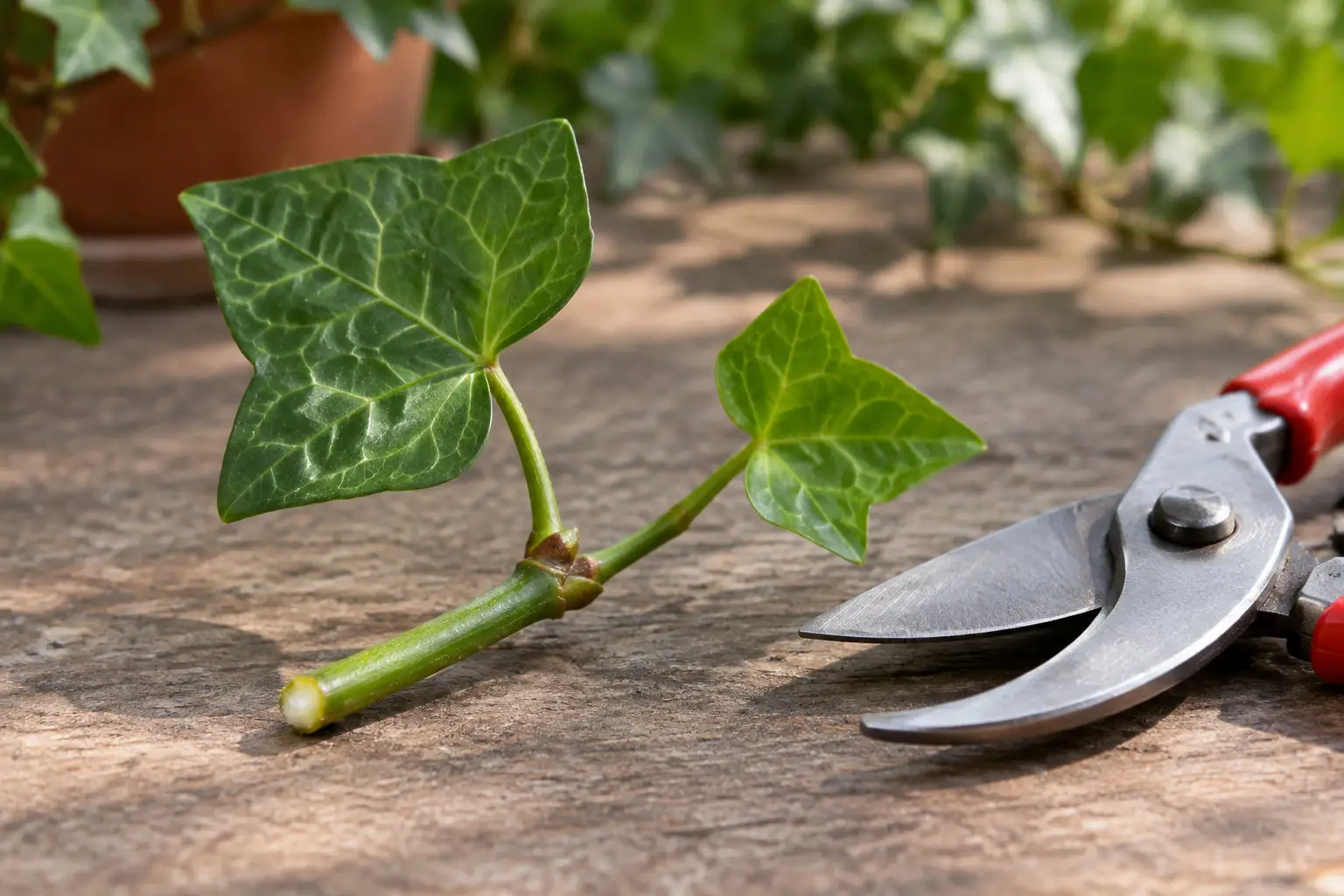
- At least two leaves. A stem section of any length, bearing two or more leaves, easily takes root. A stem without leaves often fails: it lacks reserves and surface area for photosynthesis.
- A juvenile branch. The small-leafed stems and short petioles, taken from the shoots that climb or emerge from dense foliage, are easier to handle than the long, sprawling stems with large leaves.
- In the golden lilies, a more green shoot. A cultivar with yellow leaves like ‘Buttercup’ Product of greener shoots in shade and more yellow in the sun. The greener ones, rich in chlorophyll, take root faster, and the new plant will regain the same colors depending on its light.
- A cut at a good centimeter below a knot. The node is the point where the leaf originates. Do not cut it off: the roots can appear on the entire length of the stem left under the node.
| Type of cutting | Part taken | Interest |
|---|---|---|
| From the head | The end of a twig | The simplest one; one cutting per branch |
| The section | The entire branch, cut into several pieces | Several cuttings from a single stem, useful for a rare cultivar |
| At crossette | A branch with a fragment of the branch that carries it | Keep an older wooden stick at the base |
Rooting at home: constant humidity, heat depending on the species
A willow cutting takes root in a healthy, well-draining environment, always moist but never soaked. Reduce its foliage to a minimum To limit evaporation, then place it in a light and airy mixture. Pure vermiculite is well suited for planting seedlings.
To prevent the leaves from drying out, place the pot in a transparent plastic bag or a mini-greenhouse: rooting is faster. A cutting that dries out loses its leaves. Place it in well-lit but never direct sunlight.
Plant the cutting directly into the soil without passing it through a glass of water: this is the method we recommend.
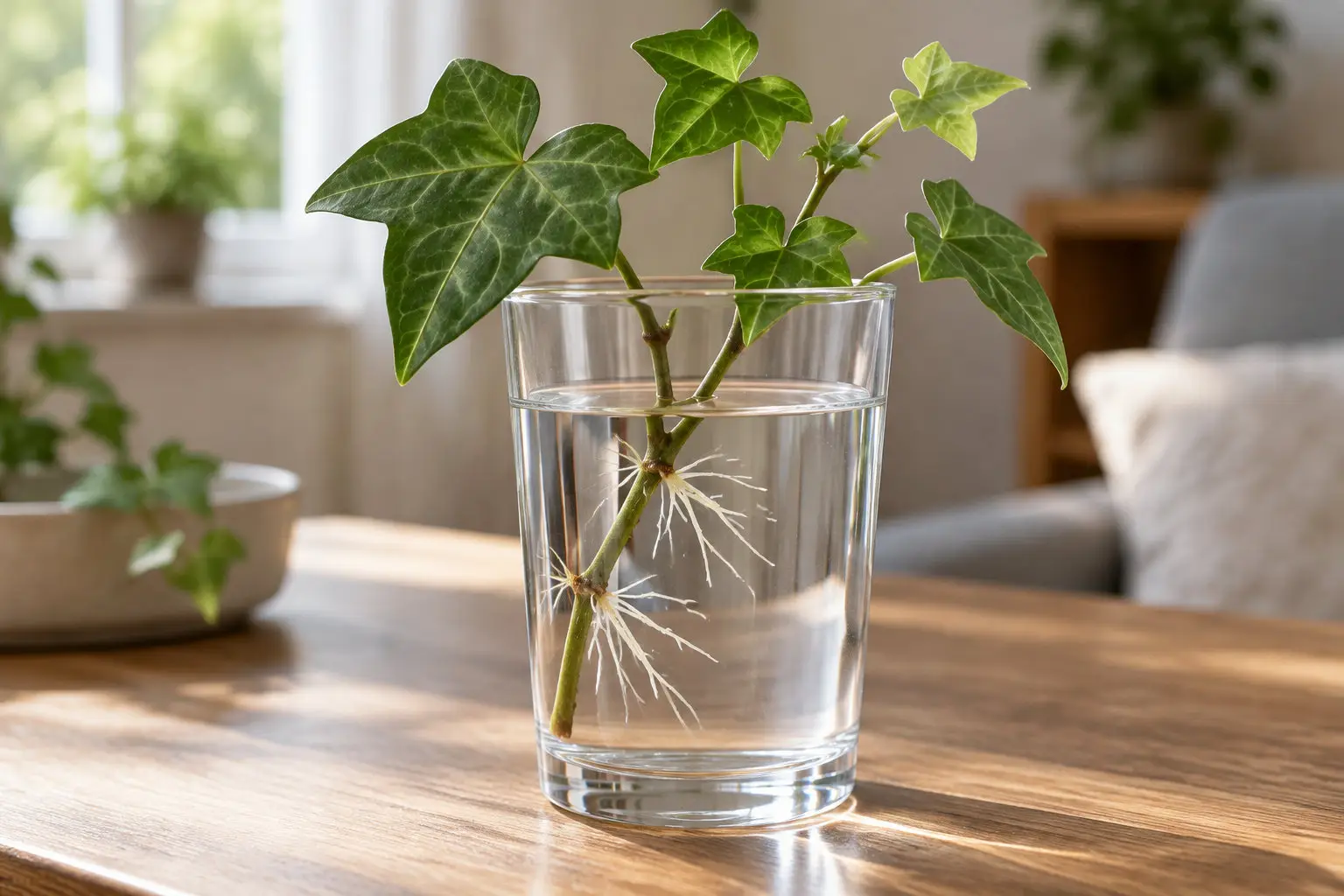
The small roots already present are not useless crampons. Many stems bear aerial roots under their lower surface. When in contact with a moist substrate, they become true roots, just as they do in nature when a stem encounters a pocket of soil.
The right temperature depends on the species
| Lierres | Conditions for rooting |
|---|---|
| Cultivars of’Hedera helix | Mild warmth and constant humidity: 18 to 21 °C in the greenhouse for the producers, then 15 to 18 °C once the plants have taken root |
| H. colchica, H. hibernica, H. rhombea and their forms | Lower temperatures: a cool, bright room, on sand that is kept moist, rather than a heated mini-greenhouse |
| Adult or arboreal forms | Slow recovery, several months; a rooting hormone helps |
The Japanese ivy, H. rhombea, Therefore, it is one of the plants that need to be planted in the cold.
Choosing the season, accepting the duration
The root canal procedure can take a week or several months. August is the best time of the year The stems are then quite woody. In winter, without a heated greenhouse, it is much more difficult: cuttings made in November may not root until March or April. A winter cutting is therefore not necessarily lost; it waits for spring.
Only roots prove the recovery: a new growth may appear before they do. Do not take the cutting out of its pot to check, and keep the substrate moist without overwatering.
Adult and arboreal forms, a special case
A cutting taken from an adult plant retains its adult shape: it produces a small self-supporting shrub, with whole leaves, often called «tree ivy», which can reach 1.30 m. This is how ‘Golden Wedding’ was born, derived from an adult plant of ’Oro di Bogliasco‘: an ivy that grows up to 1.25 m, with dark green leaves splashed with gold.
- A more difficult recovery. These cuttings often dry out before they have been rooted, and their success rate is lower. They require longer monitoring.
- The best time, autumn. The semi-ripe branches of the year, collected in the autumn, are the easiest to root among the adult shoots. Good light, without drying out, generally gives the best results.
- The hormone, in the right dose. In powder form, it is enough to quickly dip the cutting in the liquid; in liquid form, the cuttings are soaked for 24 to 48 hours and then rinsed. An excess forms a thick sludge at the base, and the roots do not appear until the excess hormone is absorbed.
Another option for professionals. Attached to a rod × Fatshedera, A sapling forms a «tree» more quickly, with a better success rate than an adult sapling.
Keeping young plants indoors
Once rooted, the cuttings are grown like indoor plants, with special attention given to rare cultivars.
Light
The pot must be kept less than 2 m from a window: beyond that, the light is insufficient, especially in autumn. A curtain stops up to half of the light. Otherwise, artificial lighting must be used for at least eight hours per day.
Temperature
10 to 15 °C is sufficient. Ivy tolerates a room heated to 20 or 25 °C, but keep it away from radiators so it doesn’t dry out, and water its foliage.
Watering
No fixed schedule: lift the pot, touch the ground. A light pot is thirsty; a heavy pot does not need water. Excess water is far more to be feared than lack of it.
Container
Plastic retains more water than clay: add sand or gravel to the mixture to lighten it.
Eliminate without delay anything that is not typical. In a pot, each plant can be easily monitored: remove any stems or leaves that do not have the characteristics of the cultivar. In the case of hybrids, the lack of light causes fully green, more vigorous shoots to appear, which would eventually invade the plant. See also the white variegated foliage fern.
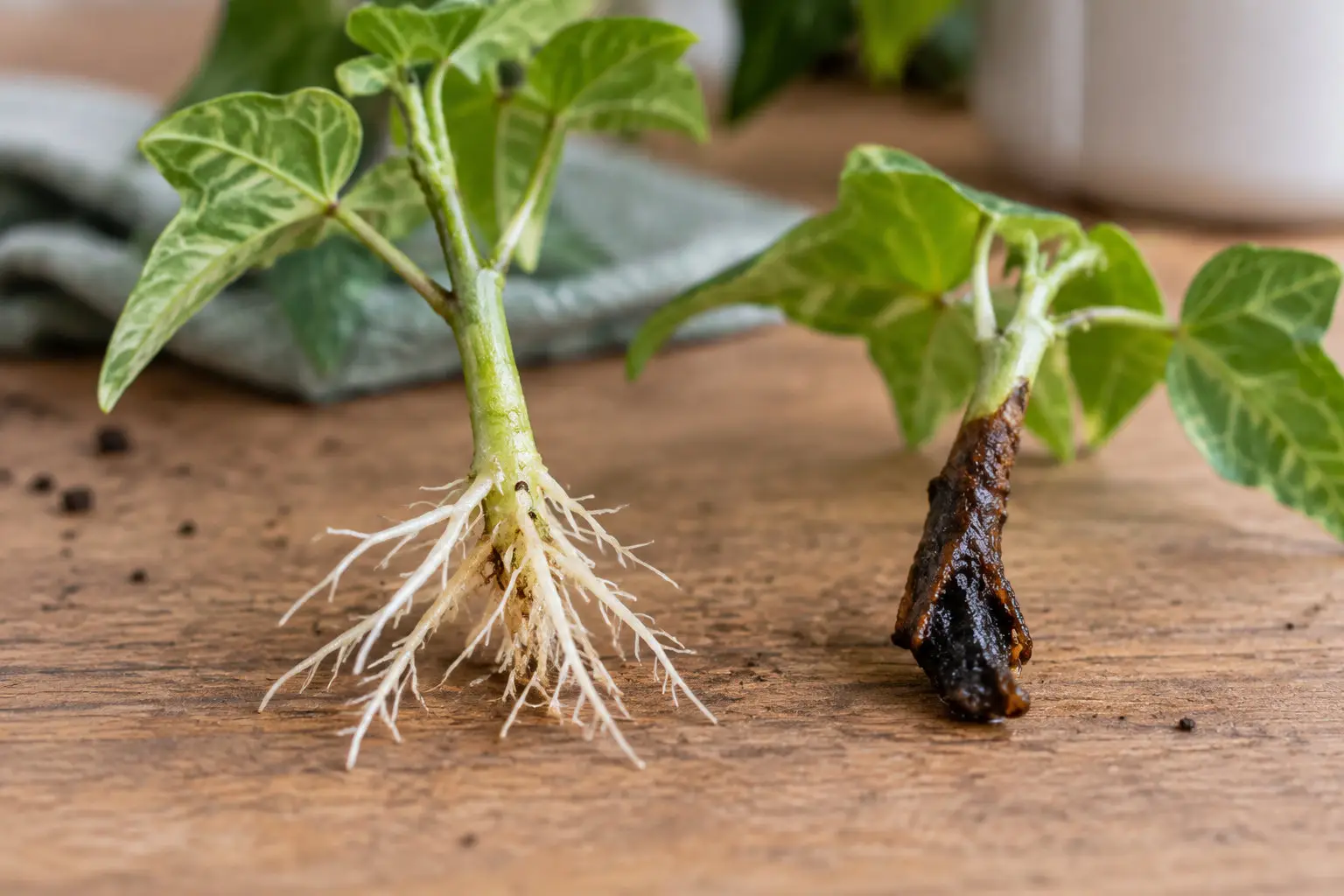
A black and soft base often indicates an excess of water. Cut off the affected part and start over with a healthy stem.
Inside the house, also watch out for aphids at the tips of the young shoots, the caterpillars that are present all year round under shelter, and the honeysuckle aphid, which marks the leaves with yellow spots. For fertilizer, a nitrogenous input from March to October is sufficient, never exceeding the recommended dose.
Labels and register: the memory of the collection
A bud without a name loses most of its value. Each pot must bear its label, and each plant is entered in a separate register.
- On the labelThe name of the species and cultivar, a source code (for example, the first three letters of the nursery), then the number and year of arrival: «4/96» refers to the fourth plant received in 1996.
- In the registerThe number and exact date of arrival, the name at arrival and the name after determination, the provenance, the synonyms and the documentation consulted.
- Over the yearsThe observations of culture and growth, the dates of germination, and the collection outputs for donation or exchange.
The distinction between the name at arrival and the name after determination is crucial: many nurseries operate under a wrong name or a synonym. A spreadsheet, updated at each planting, also allows the list of the collection to be sent quickly to a correspondent.
A rare variety is preserved by cuttings: replant every plant in a pot every one to two years, taking a typical stem from the cultivar, with at least two leaves attached. Root the plants. Hedera helix warm and the H. colchica, H. hibernica and H. rhombea in the cool, preferably in August. Always keep a spare cutting, and note everything on the label and in the logbook.
Frequently asked questions
How long does it take for a honeysuckle cutting to take root?
From a week to several months, depending on the season, the species and the stage of the stem. A juvenile cutting taken in August is the fastest; an overwintering cutting without heat can wait until spring, and an adult cutting often takes several months.
Why did my variegated honeysuckle produce a green plant?
The stem sampled was probably a new growth: the cutting faithfully reproduces the twig, even the atypical one. Always sample a stem with well-spotted leaves. The seedling, on the other hand, almost always produces green plants from a variegated fern.
Do I need a rooting hormone?
Not for juvenile cuttings, which take root easily. It is useful for adult and spreading forms, whose regrowth is slow, provided the dosage is respected.
Can you grow a rare heather in winter, at home?
Yes, but slowly: without a warm greenhouse, the rooting may wait until March or April. The Irish, Colchide and Japanese varieties tolerate these cool conditions better than the cultivars’Hedera helix.
How often should a collection fern in a pot be repotted?
Every year or every two years. In the pot, the volume of soil eventually blocks growth, and replanting with a cutting keeps the plant young and juvenile, true to the cultivar.

 Français
 English (UK)
 Deutsch
 Nederlands
 Italiano